
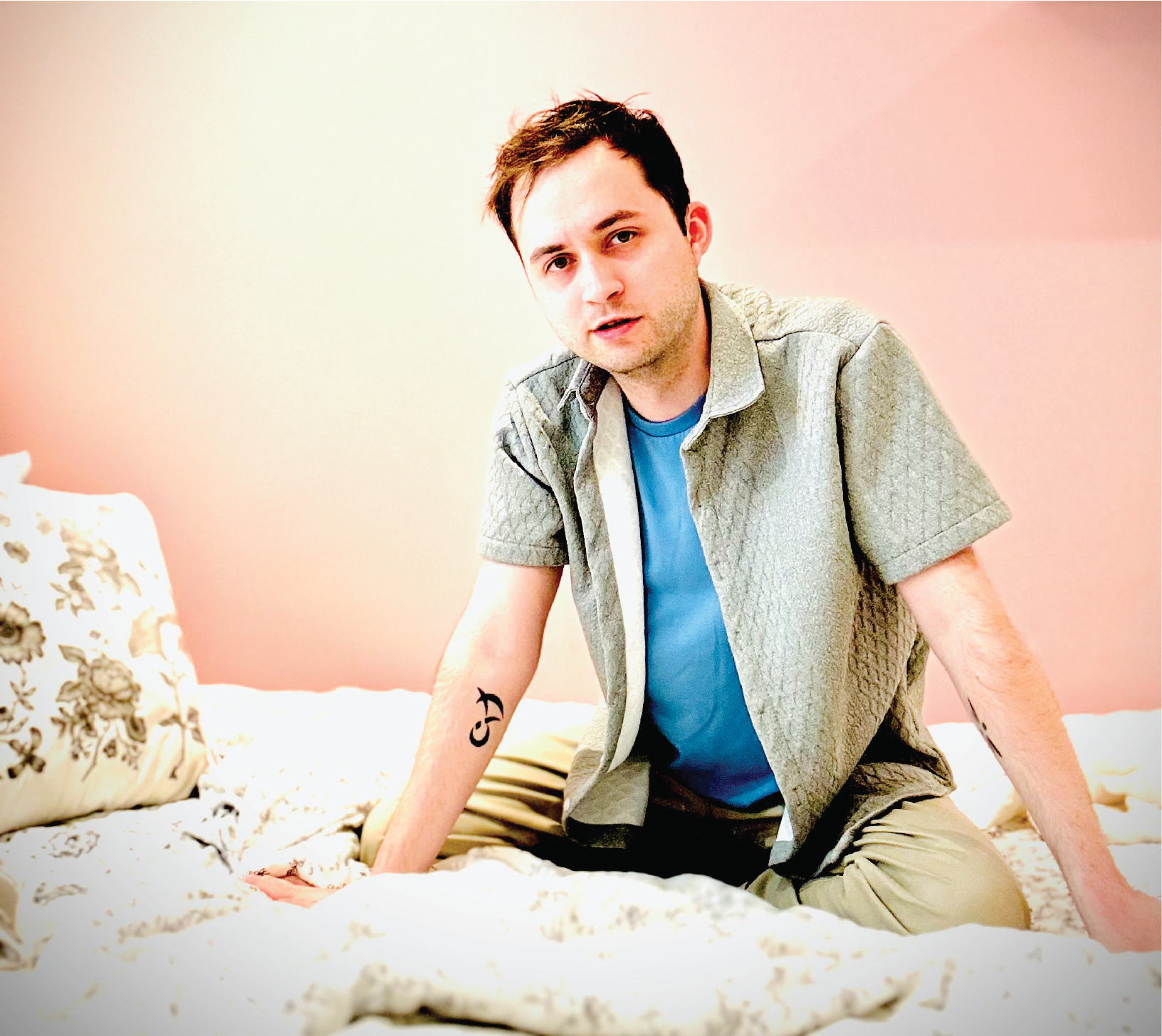
Photo: Jesse Bloodgood
New York state songwriter Jesse Bloodgood steps into a new chapter with Wishful Thinker, a debut solo EP that doesn’t flinch from the realities of anxiety, depression, addiction, and self-doubt — but refuses to stay there.
Built on scrappy, emotionally direct vocals and modern indie rock arrangements that balance rawness with restraint, the record captures an artist navigating darkness while still reaching for light. Recorded with Plaid Dog Recording in Massachusetts and shaped through close collaboration with producer Ryan Gallagher, Wishful Thinker feels both deeply personal and carefully crafted.
In this interview, Jesse reflects on vulnerability, growth, collaboration, and the tension between hope and uncertainty that defines the EP’s emotional core.
Wishful Thinker explores self-reflection, anxiety, depression, and addiction with striking honesty. When writing these songs, how do you decide what to reveal and what to keep private, and how do you protect yourself emotionally while sharing such vulnerable material?
Jesse: I’ll be the first to admit that I overshare — particularly in my music. You mention anxiety; you’d think the way I sing about it might deter me from getting so personal, but it just pours out of me.
I’ll tweak a lyric here and there, change a person’s name for privacy, or dramatise a situation — envisioning myself and others as characters rather than sharing strict nonfiction. But most often I just write what I’m feeling. It may be layered in metaphors, but it’s usually quite forward all the same. If I decide something is truly too much, I keep those songs for myself.
Your lyricism feels both introspective and forward-looking — there’s pain, but also aspiration for growth. Was there a particular moment or life shift that shaped the emotional direction of this EP?
Jesse: There was a lot going on while writing the EP. The funny thing is that I can communicate it all much more easily through lyrics than in conversation. I’ve struggled seriously with my mental health at times, and this period was very dark. When I look back, I sometimes don’t recognise myself. That sounds dramatic, but I’m not kidding. I’ve come a long way.
The forward-looking element was a necessity. I had to project a positive outlook — a silver lining. I’m glad those elements are there. Not enough raw emotional rock reminds you that growth is possible.
Your scrappy yet intricate baritone-tenor delivery is a defining part of your sound. How conscious are you of your vocal tone as a storytelling tool, and did you approach your performances on this EP differently from past projects?
Jesse: Scrappy indeed. When I’m writing this sort of music, I use my most natural voice. My voice has seen some style changes over the years. I had a cringey folk-rock phase in my early twenties where I tried to imitate The Avett Brothers meets Bruce Springsteen. On the other hand, I’ve gone for a more suave and clear tone when working on pop tunes.
I once heard someone say, “Singers are actors.” That might be hyperbolic, but the idea rings true. The performance should be convincing. Make us believe it — and believe it yourself. The intention has to be there.

You’ve previously co-fronted An Artist’s Depiction and worked under the Indie Pop moniker The Star-Reacher Syndicate. What did stepping into a fully solo role on Wishful Thinker allow you to express that you couldn’t in those earlier collaborations?
Jesse: An Artist’s Depiction gave me some much-needed studio experience. Everyone had to know their part — literally and figuratively — and efficiency mattered.
TS-RS and my other DIY projects were the opposite. I didn’t have to rely on anyone, and no one was relying on me. That kind of freedom is nice… but it turns out it’s good to have people counting on you.
Wishful Thinker was a team project. Even though it’s a solo record, the EP was a group achievement. That started with producer Ryan Gallagher. Working with Ryan has been one of the most rewarding songwriting partnerships I’ve explored.
Russ, Daniel, and Celia — our session musicians — were excellent contributors as well. Bringing a ready-to-go project to professional musicians made for a smooth studio experience.
The EP was recorded with Plaid Dog Recording. How did working in a professional studio environment shape the sound or emotional intensity of the record compared to your previous DIY releases?
Jesse: A DIY setup lets you try things you might not feel confident about when others are around. Early in my career, I could hold back a bit in the studio, but Ryan is such a relaxed guy, and I have enough experience now that I didn’t struggle too much with that.
Time works against you in a studio setting, though. In the demo for the opening track, “Lighthouse Night Owl,” I had written a vocal run at the end of the second verse that I loved. On the day we tracked vocals, I just couldn’t land it. I had to scrap it.
In a private DIY setting, where time and funds aren’t concerns, I would’ve come back the next day and nailed it. But that’s really the only case I can think of where time pressured a decision. In fact, the final screaming harmony at the end of “Cutting Room Floor” took only one take, which was a relief because it’s not easy to repeat over and over.
Modern Indie Rock often balances polish with rawness. Sonically, how did you navigate that line on Wishful Thinker to ensure the production supported — rather than softened — the weight of the themes?
Jesse: Much of the production credit goes to Ryan, though I’ll admit I hounded him over a few things. I probably mentioned the vocal volume ad nauseam — I’m a lyrics snob, and I want those words heard.
As a writer, I’ve always valued dynamics. Good musicians understand when to contribute and when to pull back. I think our arrangements complemented each other rather than competing.
The title Wishful Thinker suggests tension between hope and denial. What does that phrase mean to you personally, and how does it thread through the EP’s narrative arc?
Jesse: The title fits the uncertainty of the record’s subject matter. The cover art reflects that, too.
Interestingly, some bloggers have described the album as more hopeful than doubtful, which surprised me. I felt the opposite while writing it. I think it depends on where you are emotionally when you experience it.

When writing about anxiety and addiction, there’s always a risk of romanticising struggle. How did you approach these topics in a way that feels responsible and grounded?
Jesse: Romanticism can definitely creep in, especially in other media. It takes tact to address these subjects responsibly.
I think it’s important to be honest and not glorify the gritty parts, even if you approach some of it with humour or wit. You can talk about your struggles like a human being. They’re part of the larger story of life.
The song I struggled with most was “Cutting Room Floor,” which touches on self-harm. That was the only track I seriously considered leaving off the record. Ultimately, I felt it was too powerful not to include. It offers a glimpse behind the curtain at someone who needs help, not someone celebrating their struggles.
You’re rooted in New York state but recorded in Massachusetts. How much does place influence your writing — do geography and environment seep into your lyrics and soundscapes?
Jesse: I was recently in North Carolina listening to indie folk, and that music just sounds like it comes from the mountains. Coincidentally, the bonus track “Dragonfly Island” was written and recorded in a tiny apartment in Asheville — and you can hear that atmosphere in it.
As for Wishful Thinker, I don’t think geography played much of a role. I was in and around Boston, but most of the time I was holed up in the studio. We could have been on the moon, and I probably wouldn’t have noticed — as long as there was a good breakfast spot nearby.
Looking at your journey from earlier band projects to this February 2026 solo debut, what does growth mean to you now — artistically and personally — and where do you see your sound evolving next?
Jesse: I like myself better now than I did when I was writing the record. The biggest reason might be that I’m kinder to myself now.
I hope my musicality continues to grow alongside who I am as a person. And I hope I get to share many more meaningful collaborations with wonderful people.
https://app.sonicbids.com/epk/jesse-bloodgood
https://www.facebook.com/profile.php/?id=61557060359227
https://www.instagram.com/jessebloodgoodmusic/
FVMusicBlog February 2026
Your music deserves more than $0.004 per stream… Get our FREE guide – instant download.
If you would like to submit your music for a playlist or review consideration, please submit here.
Also! Check out the awesome other artists on the ‘Discovered This Week’ Playlist!

Leave a Reply