
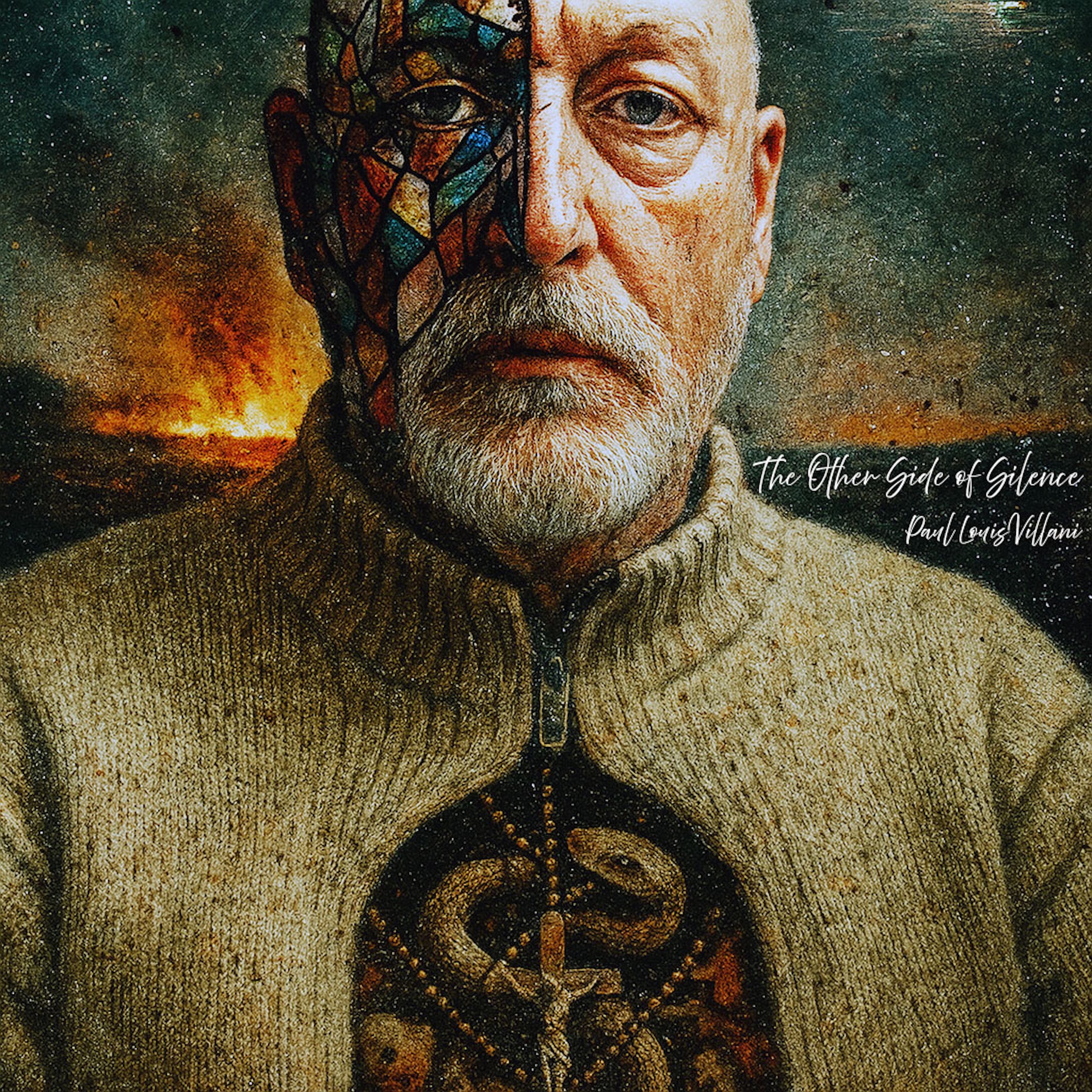
Photo: Paul Louis Villani
Today we’re joined by Melbourne-based musician, composer, and sonic provocateur Paul Louis Villani. Known for fusing the raw power of metal with experimental textures and deeply philosophical lyricism, Paul has just released his brand new EP The Other Side of Silence. It’s a 6-track journey through rage, grief, survival, and transcendence — described as both a sonic exorcism and a cathartic release. With influences ranging from Nine Inch Nails to Deftones, this EP pushes boundaries while offering raw emotional honesty.
The Other Side of Silence is described as “therapy, memory, fire, and collapse.” What personal experiences or emotions sparked this EP, and how did you channel them into sound?
The Other Side of Silence is exactly that — therapy, memory, fire, and collapse. It’s me processing the tough moments of the past five or so years: putting an end to all live performances, illness, resilience, rage, and survival. Each track became a way to pour that raw energy into sound, rather than letting it rot inside me.
Your music blurs the lines between rock, metal, and experimental. Do you see yourself as belonging to a genre—or do you intentionally reject boundaries?
Firstly, I cannot believe how many genres there are to choose from nowadays! For me, genres are like jail cells, and I’ve never wanted to be locked inside one. Currently, I let my newfound freedom around the creative process dictate the shape, sometimes that’s rock, sometimes metal, sometimes something unrecognisable. The intention is always honesty, not allegiance to a genre, label, cause, etc.
The EP moves from raw confessionals to a nearly seven-minute operatic closer. How did you decide on the track order—was it meant to feel like a single story arc?
The track order is like a story. I wanted the listener to feel like they’d been dropped in the middle of a chaotic and extravagant plot, dragged through confession and fire, and then confronted with an epic ending. It’s like an arc: collapse, defiance, transcendence.
“Can I Be Your Secret?” feels like a distorted confession. What was the emotional headspace when you wrote that track?
“Can I Be Your Secret?” came from a place of unexpected and unachievable intimacy. That uncomfortable space between desire, shame and commitment. It’s a confession distorted through the lens of secrecy, where vulnerability becomes both dangerous and addictive.
“Cathedral of the Dead God” twists indie-rock into chaos. What does the ‘dead god’ symbolize for you?
The ‘dead god’ in “Cathedral of the Dead God” is the long journey towards walking away from blind faith and hollow promises. It’s me standing in the ruins of belief systems that failed me, finding a voice inside a pathetic and unproven carcass that people still kneel to.
“Fighter” has this doom-blues, riff-driven energy. What do you want listeners to feel when they hear it—anger, empowerment, survival, or something else?
“Fighter” is meant to be physical. Doom-blues, ugly riffs, venom spitting. I want people to feel the same mix I felt writing it: fury, survival, spite, but also a strange catharsis (I will admit I enjoyed every second of this recording and writing process). Anger doesn’t just destroy; it purges.

In “Soldier Girl,” there’s rebellion and rage wrapped in seduction. Is that character someone real, imagined, or a reflection of yourself?
“Soldier Girl” This girl is imagined, real, and symbolic all at once. Rage wrapped in seduction because sometimes that’s the only way power is tolerated. It’s rebellion with a body.
“Stuttering Verities” closes the EP with operatic vocals and heavy fury. Why was this the right track to end on—what transformation did you want listeners to leave with?
“Stuttering Verities” had to end the EP because it’s the eruption after silence. The operatic layers, the heavy fury. It’s the breaking point where everything unspoken finally roars out. I wanted listeners to leave scorched but awake and pressing repeat.

You’ve been called a “sonic provocateur.” Do you intentionally try to provoke—whether emotionally, spiritually, or socially—or is that just the natural outcome of your creative process?
Provocation isn’t the goal; honesty is. But when you tell the truth without filter, it can often provoke. Emotionally, spiritually, socially. If that makes me a “sonic provocateur,” then it’s just the natural fallout of refusing to dilute myself. If what is provoked is dislike and unacceptance of my art, then that’s ok too!
If listeners take just one message or feeling from The Other Side of Silence, what do you hope it is?
If there’s one thing I want people to take away, it’s that silence is never empty. It holds therapy, memory, fire, and collapse. And inside that, there’s always the possibility of transformation. Be willing to burn (creatively, with new energy), and to begin again, which for some of us could mean the 10th time in our lives that we’ve had to go through this “reawakening” process. That too is ok. We are only human. Perfectly imperfect in every way.
https://www.facebook.com/paullouisvillanithebeast
https://www.youtube.com/@paullouisvillani9866
https://instagram.com/paul_louis_villani
FVMusicBlog September 2025
If you would like to submit your music for a playlist or review consideration, please submit here.
Also! Check out the awesome other artists on the ‘Discovered This Week’ Playlist!

Leave a Reply