
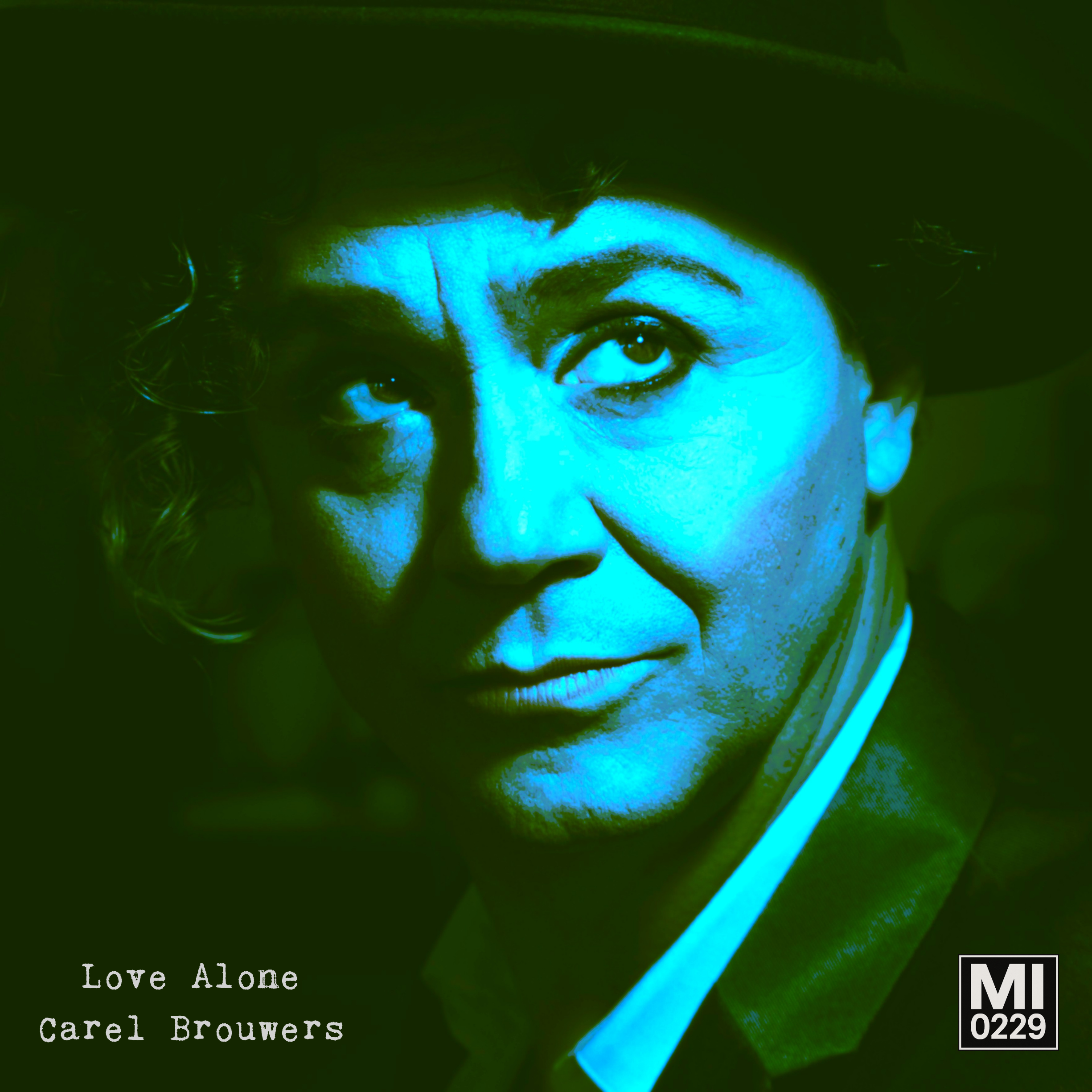
Photo: Carel Brouwers
Carel Brouwers approaches songwriting with the mind of both a musician and a classicist. Drawing on his background as a teacher of classical languages, his latest project reimagines the Olympian gods not as distant mythological figures, but as reflections of the emotions and contradictions that shape human life.
His single “Love Alone” places Zeus at the centre of that exploration — a powerful yet deeply flawed character caught between duty and desire. In this interview, Brouwers discusses the inspiration behind the song, the cinematic influences shaping his sound, and how mythology, melody, and storytelling come together in his upcoming concept album.
Your upcoming album explores the idea of the Greek gods as metaphors for the emotions we carry within ourselves. What first inspired you to frame the project around mythological archetypes?
To begin with, besides being a musician I am also a teacher of classical languages. That means I am very familiar with the classical mythological tradition. And those stories are wonderful! The Greek gods were anthropomorphic: they resembled humans both in appearance and in behaviour, including all the quirks and emotions that come with being human. That is precisely why they are so recognizable to us mortals, who make mistakes and are constantly tossed around in a rollercoaster of emotions.
Love Alone centres on Zeus — often portrayed as both powerful and deeply flawed. What aspects of that character resonated most with you when writing this song?
Zeus is the leader of both gods and humans. He presides over the council of the gods. Yet when things really matter, he often avoids his responsibilities, which sometimes leads to entire wars—such as the Trojan War. He would rather chase women; after all, meetings are boring and long-winded. And that is a trait I recognize in myself as well. As a teacher, husband and father I have many responsibilities, but I constantly have to fight the urge to set those responsibilities aside and go in search of adventure. And I’m sure I’m not the only one. Many people will recognize themselves in that tension.
The song explores the tension between desire and responsibility. How did you translate that emotional conflict into the music and lyrics of Love Alone?
Love Alone is a slow song. The opening line is “another meeting, slow as stone”, emphasizing the dull routine of responsible adult life. Until Zeus sighs and says, “let my dream begin,” a metaphor for a new amorous adventure. That line is sung on a single note that rises above all the others, symbolizing the triumph of adventure over responsibility.
Your work blends indie art-pop with cinematic textures. When you’re composing, do you think more like a songwriter or like a film composer building a scene?
That is a very interesting question! In truth I combine those two roles all the time while composing. Besides making music, I also love painting and drawing. I’m a very visual thinker and I see all kinds of scenes forming in my head while writing new music. Only then does the music really gain meaning. For that reason I try to avoid clichés in my lyrics, because the images attached to those… well, we all know them by now.

You cite influences ranging from David Bowie to Ennio Morricone and even classical composers like Mozart and Rachmaninov. How do these very different worlds shape your sound?
Bowie hardly needs any explanation. Like no one else, he could combine different disciplines and fuse them into a coherent whole. In a sense, Bowie painted his music and was never interested in the quick, easy hit single. Morricone I consider something like the Mozart of our time. His works are full of phenomenal melodies, but when you study them they are often deceptively simple—yet incredibly effective. And you instantly recognize Morricone; his musical signature is unmistakable. I am also a great admirer of the guitar sound in his spaghetti westerns. I think listeners will hear that influence in my new songs. Mozart I have always admired for that same quality: everything he wrote seems so simple, yet that is exactly where the enormous strength of his craftsmanship and artistry lies. I sing in a classical choir and we have his Ave Verum in our repertoire. The score looks so simple, yet it is so effective. In his short life he wrote nothing but masterpieces. Finally, Rachmaninov is the master of the minor-key melody. As a pianist—he was one of the greatest concert pianists of all time—he could make the piano sing in a way that no one else could.
What I admire most in these four influences is their ability to create beautiful melodies with relatively few notes. I therefore consider myself primarily a melodic composer rather than a rhythmic one.
The Mellotron has a distinctive character that appears in your music. What draws you to that instrument, and how does it help create the atmosphere you’re aiming for?
When I first heard the sound of the Mellotron in the 1990s on records by Radiohead and Suede, I fell in love instantly—what character! Everything I get out of my Mellotron (an M4000D) sounds wonderfully melancholic. I truly adore those sounds. About a year ago I bought a Mk2 VST that contains all kinds of rhythmic patterns which I could manipulate with varispeed. That was when the idea for my new album was born: I began by manipulating rhythms and then challenged myself to write melodies and chord progressions around them.
In doing so I deliberately imposed limitations on myself, because those rhythm boxes in the VST don’t offer every possible key or chord. The challenge was precisely in
those limitations, and I loved that. It forces you to become very creative. That is how the songs I am now releasing came into being. Every song is based on a manipulated rhythm from the Mellotron.
Rather than focusing on traditional pop hooks, your music often prioritises layering and tension. What attracts you to that more narrative and cinematic approach?
I think that approach suits my concept album better. It is not about separate songs built around a catchy hook. Together they tell a larger story. That is why I will eventually release the project as a full concept album, even though the songs are currently being released as singles on streaming platforms.

Love Alone follows The Shape She Takes (Aphrodite). How do these songs connect within the broader story or emotional arc of the album?
Across ten songs, all the Olympian gods appear. Since there are only ten songs, some tracks are “shared” by multiple gods or goddesses. For instance, I wrote one song about Ares, the god of war, and Hades, the god of the underworld. I’m simply not a big fan of war and death, so I didn’t want to give those gods more of a stage than strictly necessary.
What I would love is for listeners to finish the album and conclude that we humans are actually divine ourselves—that we are not so different from that amusing family of Zeus, Hera, and the rest.
You create your music in North Holland. Does your environment or the cultural landscape around you influence the mood or themes of your songwriting?
Not really. This album mainly grew out of my love for cinematic music and the ancient world. I even think I might eventually use it in my teaching. I could ask my students to analyse the lyrics as literature. I’m curious whether they will recognize which god or goddess appears in each song!
With this album exploring mythology, emotion and identity, what do you hope listeners ultimately take away from Love Alone and the wider project?
Ultimately, it’s all about the music. If people enjoy listening to it, then my mission has succeeded. Whether that is a handful of listeners or thousands doesn’t matter too much to me—although, of course, a larger audience makes it easier to create new music afterwards. And if people also appreciate the lyrics and can smile with me at those very human Greek gods and goddesses, that would be a wonderful bonus.
https://www.youtube.com/@carelbrouwers1707
FVMusicBlog March 2026
Your music deserves more than $0.004 per stream… Get our FREE guide – instant download.
If you would like to submit your music for a playlist or review consideration, please submit here.
Also! Check out the awesome other artists on the ‘Discovered This Week’ Playlist!


Leave a Reply