
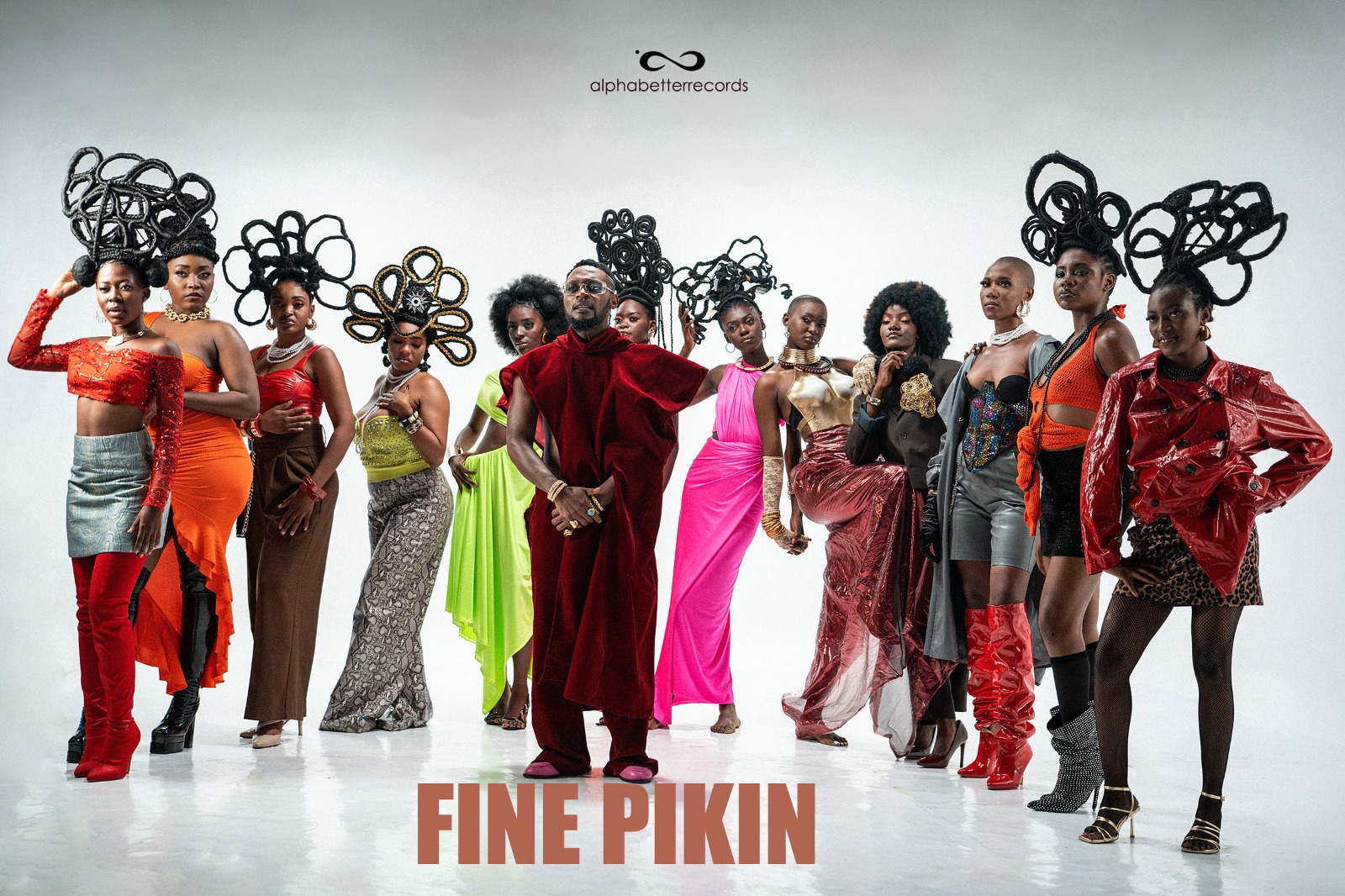
Photo: Salatiel
We were lucky enough to catch up with Salatiel following the superb release ‘Fine Pikin‘. Enjoy our full interview below.
“Fine Pikin” blends Bendskin, Bikutsi, rock, and Afrobeat in just 2 minutes and 26 seconds. What was your creative process for fitting such rich musical diversity into such a concise track?
It all started with a desire to propose a new direction for Cameroonian traditional music—one that could appeal beyond the Cameroonian community. The first step was to create a steady jingle or musical gimmick. Instead of using the traditional instruments typically found in Bendskin and Bikutsi, I chose to incorporate globally recognizable sounds—drawing from rock and pop—to establish the core musical motif.
The second challenge was integrating the groove, which was quite unconventional. I opted for a 6/8 time signature, which is atypical for this genre. Next came blending local rhythms with traditional sounds. I made the deliberate choice to reduce the role of percussion, even though it’s usually a dominant feature in traditional music.
Following that, I focused on the bassline. I wanted it to remain relatively simple, acting more as a rhythmic gimmick than a melodic driver. This helped streamline the overall sound and gave the track a distinct identity.
Another key element was the vocal style. The singing is modern and trendy, yet it still respects the traditional time signature. Ultimately, the goal was to propose a new template for the future of traditional Cameroonian rhythms—something that both rock and pop artists could adopt, expand upon, and use to revolutionize the sound. It also opens the door for other genres to blend into traditional rhythms in innovative ways.
The video is a visual feast — full of vibrant colours, movement, and fashion. What story or emotion did you want the visuals to express beyond the music?
When creating a special song like Fine Pikin, the challenge was finding the right balance— avoiding being too traditional while also not appearing completely out of place with a modern look. Together with the video director, we aimed to make a music video that felt just as unique and special as the song itself.
The process mirrored the sound production approach. We didn’t want a typical representation of African aesthetics. Instead, we wanted to showcase African tradition through a modern, current, and even futuristic lens. The song is short—just 2 minutes and 26 seconds—so we had to make every second count. Our goal was to fill this short time with enough compelling content to keep the video engaging without taking away from the song’s uniqueness.
To achieve this, we worked scene by scene. Every shot was carefully planned and pre-edited before filming began. To avoid overcrowding the video with visuals, we opted for a uniform background and a single location. Since the song celebrates feminine beauty and expresses love for it, we chose a plain backdrop that allowed us to be more playful and expressive with the other visual elements.
One of our key creative choices was blending deep-rooted traditional African hairstyles with modern fashion. Keeping everything in one location helped maintain focus on the models, highlighting the contrast and harmony between tradition and modernity.
You worked with international stylist Briss Toukam Yetmou on the fashion direction. How did you ensure the outfits honoured African traditions while pushing a modern aesthetic?
Briss Toukam is one of the best Afro-futuristic stylists I’ve ever worked with, and he was the perfect person to bring the vision for the video to life. His styling goes far beyond folkloric representations—his designs are highly creative, pushing the boundaries of African fashion in a futuristic direction.
To complement Briss’s bold aesthetic, we brought in a traditional hairstylist, knowing that his approach would lean heavily into the futuristic side of African femininity. While developing the script, we delved deep into cultural research—not just from Cameroon but from various African traditions. Our goal was to curate a visual narrative that tells the story of what it means to be African and how that identity can evolve.
We aimed to expand the visual language of African style, blending the past and the future into a cohesive and powerful set of images. Briss delivered beyond expectations—his work was truly outstanding.
The phrase’ beauty that shines from within’ really stands out. What does ‘Fine Pikin’ mean to you on a personal level — and what message are you hoping to share through it?
Musically, as both a singer and producer, taking control of the entire process allowed me to explore a new way of expressing beauty. I wanted to present a fresh perspective—one that doesn’t shy away from challenging norms or pushing boundaries.
In much of African music, women are often portrayed through a lens of sexualization. Their beauty is frequently reduced to sexual appeal. With this project, I aimed to break away from that narrative. I wanted to celebrate the beauty of women without relying on sexual attraction or presenting them as objects of desire.
Instead, I sought to highlight the woman as a complete human being—her physical beauty, yes, but also her strength, dignity, and role in society. This is about redefining how we talk about and represent feminine beauty in our music and culture.
From folk rhythms to international mastering in Australia, “Fine Pikin” is clearly a global project. How important is it to you to merge local Cameroonian roots with international sounds and standards?
As a musician, this is what drives me—finding ways to elevate and evolve Cameroonian rhythms for a global audience. For some listeners, these sounds might feel unfamiliar or stand apart, not easily fitting into mainstream playlists. But throughout my career, I’ve always embraced the risk of pushing boundaries—whether through sound design, composition, or structure—to create something new, something that doesn’t yet exist.
That’s one of my most important missions.
My musical training and background have made me versatile; I’ve worked across many genres, and that experience helps shape my approach to sound. I believe the future of music—especially world music—lies in how we fuse these diverse influences. And Cameroonian traditional music must also find its place in this global fusion. It deserves a voice in the evolving landscape of sound.
Dr Nkeng Stephens directed the video. What was it like collaborating with him on bringing your vision to life — and what was the most memorable moment on set?
Collaborating with Dr Nkeng is always a smooth and inspiring experience. He’s not just a video director—he’s also a highly experienced producer and songwriter. Working with him feels very natural. I bring my vision from the musical side, imagining how the song could be translated visually, and he does the opposite—bringing the sound to life through images.
Our process is very collaborative and fluid. We often go back and forth, even making small adjustments to the music production to better fit the visuals. One memorable moment was during the pre-production phase—editing the video concept to match the sound. We had a key meeting with the stylist and all the set assistants, where we developed what was more of an “editing script” than a traditional video script.
Dr. Nkeng and I somehow speak the same creative language—him through images and me through sound. That’s what creates such a strong harmony between the music and the visuals. He’s also very open to ideas and fully respects the creative intention behind the music, which makes the collaboration even more powerful.
With the summer vibe and energetic tempo, “Fine Pikin” feels like an anthem for celebration. Was that the goal from the start, or did the track evolve that way during production?
The song evolved throughout the creative process. Once I had settled on the main gimmick, I began building the body of the track. Bikutsi, as a genre, is naturally celebratory—it carries an energy that uplifts—so it felt fitting to create something with that joyful tempo and spirit.
However, fusing genres to make the song more accessible to a wider audience was a real challenge. It took a lot of experimentation—testing different elements to see what fit together and what didn’t. It was all about finding the right balance between tradition and modernity.
The final step was the writing, which also had to match the rhythm and feel of the music. It was a gradual process, layering each element until the full vibe of the song came together. In the end, everything aligned to create a sound that feels fresh yet rooted.
As both artist and producer, you had full control over the sound. Were there any specific instruments or elements you felt had to be included to keep the song true to its cultural roots?
To preserve the traditional essence of the song, it was essential to include elements that are the signature of Bikutsi. The marimba (also known as Mendjang) plays a central role in representing the genre’s identity. Alongside that, I used a muted solo guitar to emulate the percussive rhythm—an important part of the Bikutsi sound.
Since both Bikutsi and Bendskin are heavily percussion-based styles, it was important to include just the right amount of percussion—enough to honour the tradition but not so much that it overwhelmed the fusion with urban music elements. Finding that balance was key to keeping the sound authentic while still fresh and accessible.
Your label, Alpha Better Records, continues to innovate and push Cameroonian music forward. How does “Fine Pikin” reflect the label’s mission and your personal evolution as an artist?
Fine Pikin represents a new level in my journey of fusing Cameroonian music with modern sounds. Compared to my previous work, this project took more time and experimentation to find the right balance between each element. It was a process of trial and error—searching for the right formula to make the fusion feel natural yet fresh.
There are several upcoming projects that follow this same vision, exploring experimental ways to blend traditional sounds with contemporary styles. This approach has always been at the heart of what Alpha Better Records stands for—redefining music styles and making traditional sounds more accessible and appealing in today’s music landscape.
Fine Pikin marks the beginning of a new era but with the same core mission: to keep pushing the boundaries of Cameroonian music.
Looking forward — how do you see “Fine Pikin” influencing your next projects, and what can fans expect from Salatiel in the coming months?
The song is out now. It takes time for people to digest new sounds, create playlists, and let unfamiliar music become familiar. Fine Pikin is just the first step—there’s a whole album coming that serves as a kind of blueprint for this new fusion of sounds.
We’re developing it not only creatively but also strategically, working on the marketing side to carve out a space for these sounds in the mainstream market.

https://www.therealsalatiel.com
https://web.facebook.com/therealsalatiel/
https://x.com/TherealSalatiel
https://youtu.be/gfaYlG2s4Jg
https://www.instagram.com/therealsalatiel
https://www.tiktok.com/@therealsalatiel
FVMusicBlog June 2025
If you would like to submit your music for a playlist or review consideration, please submit here.
Also! Check out the awesome other artists on the ‘Discovered This Week’ Playlist!


Leave a Reply