
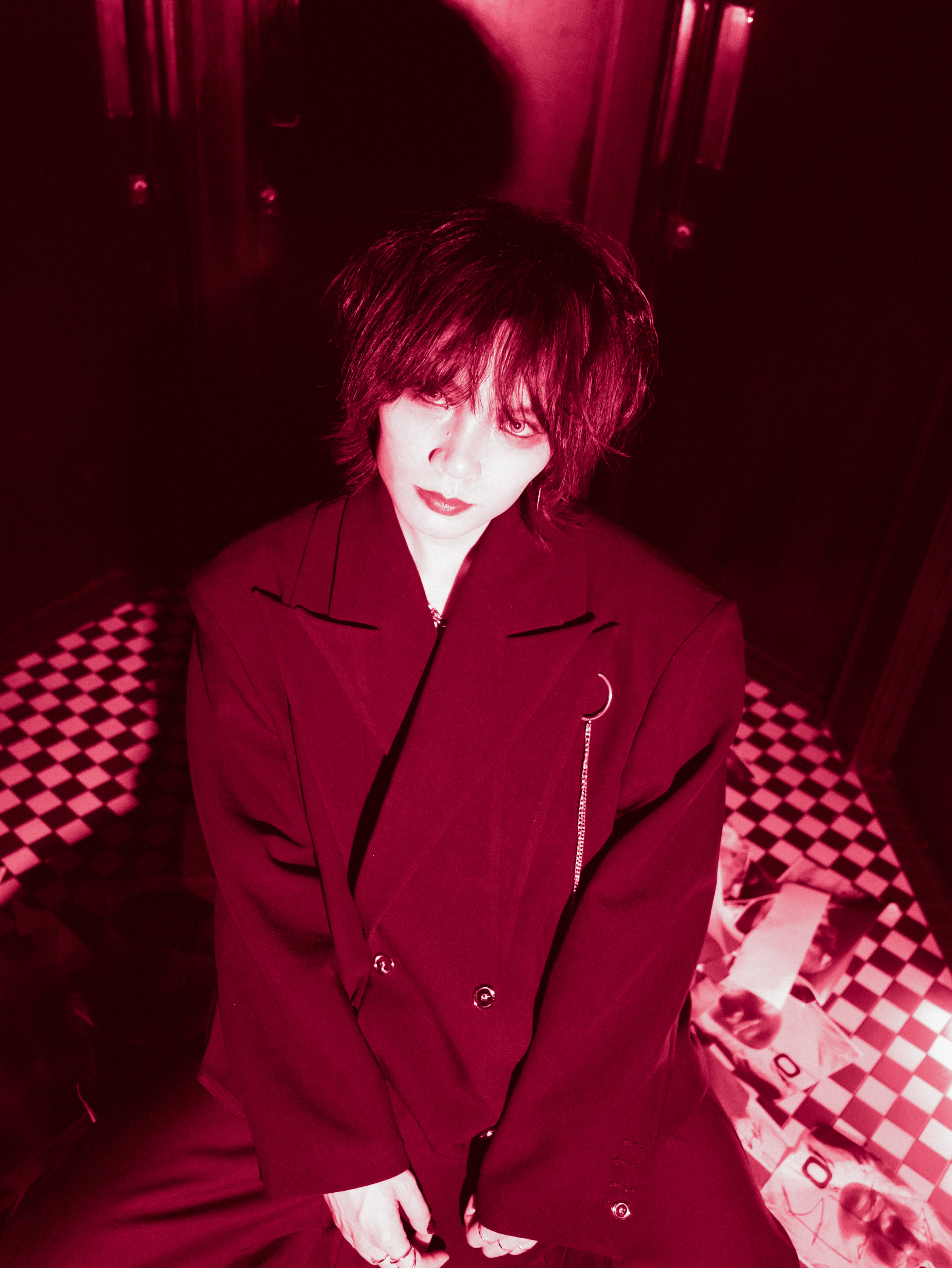
Photo: Chaidura
Stepping into LIMINAL feels like entering a world suspended between past and future — a place where identity fractures, reforms, and finds its way back to truth. For Chaidura, this new era wasn’t just a creative pivot; it was the result of an intensely personal reckoning with self-doubt, comparison, and the pressure to become someone else. “Heaven,” the EP’s lead single, marks the moment of surrender — a return to the raw, emotional, spiritually charged artistry that has always defined Chaidura’s core.
In this conversation, Chaidura opens up about rediscovering artistic identity, reconnecting with visual rock roots, building a darker and more surreal universe, and learning to create from a place of acceptance rather than expectation. This is LIMINAL — not just an EP, but a portrait of becoming.
LIMINAL explores the emotional space between who you were and who you’re becoming. Where in your life did this “in-between” period begin for you, and what made you decide to turn that transition into a full creative project?
Looking back, I think this “in-between” stage has existed at every point in my life. I’m very dopamine-driven, so I’m constantly reaching for the next thing and rarely satisfied with where I currently am. That sense of always being between versions of myself has been a recurring theme.
More recently, it became very concrete in my identity as an artist. At the start of the year, I tried to change myself to fit what I believed people wanted. But even after doing that, the results weren’t what I expected, and I didn’t feel any closer to becoming the artist I’m meant to be. That disconnect — trying to be someone else and still not achieving what I thought I would — made me realise I wasn’t aligned with myself.
That’s what pushed me back to rock and metal, and it’s what sparked LIMINAL. I wanted to explore the parts of myself I’d been neglecting and speak openly about this “in-between” feeling. That’s how the personal transition naturally grew into a full creative project.
You’ve said that “Heaven” was born during a period of deep self-doubt and comparison. When did you realise striving for control was holding you back, and how did that insight turn into the song’s message of surrender and self-love?
That moment happened shortly after releasing “Temple Paradise”. The EP did pretty well — people engaged with it and resonated with the concept — but I still felt like I could’ve done more. Instead of appreciating what I created, I started comparing myself to other artists who seemed to be doing incredible things.
That’s when I stopped operating from the heart and started thinking from the head: What do people like? What sells?
I saw K-pop groups selling out arenas and thought, “Okay, maybe I need to be more like that.” I believed I could control the outcome if I moulded myself into what I assumed people wanted.
But I wasn’t happy. People could feel that I wasn’t present in the music. I lost a sense of self-love because I convinced myself that the visual rock version of me wasn’t “good enough.” Ironically, the K-pop-leaning version turned out to feel even less authentic.
Realising that brought me back to who I truly am. The visual rock version of me is the real me. That moment of recognising and accepting that — of surrendering control — is what inspired Heaven. The song became a message about returning to myself.
The track returns to your emo-visual rock roots. What parts of that sound feel like “home,” and how did reconnecting with those roots shape your identity in LIMINAL?
For the first half of the year, I barely listened to visual kei or rock at all — it was mostly pop and K-pop. Taking that break actually made me appreciate visual kei even more when I revisited it later.
With Heaven and LIMINAL, The GazettE was a huge influence — probably 90% of the inspiration for this EP. I studied Uruha and Aoi’s guitar tones, their playing approach, and, of course, vocally, I’ve always been inspired by Ruki. Singing in that emotive, aggressive-meets-melodic way feels very natural to me.
Reconnecting with those roots helped me rediscover my identity. The GazettE has such a broad sonic range, and LIMINAL reflects different pieces of that — but always through my own filter, my own interpretation. The goal wasn’t to copy, but to rediscover the parts of me that were shaped by that sound in the first place.
“Heaven” blends heavy guitars with spiritual choir elements. What does that contrast represent about your inner world, and how intentional was it during production?
I’ve always had these two extreme sides to me — the aggressive and the vulnerable — and that naturally shows up in my music. Even vocally, I either scream quite intensely or I sing in a very soft, melodic way. I physically can’t do the rougher mid-range rock vocals, so maybe the extremes are partly a skill limitation — but they’re also just how my artistic brain works. I go hard, and I go soft.
That duality creates contrast: a scream followed by a fragile vocal line. I love that dynamic, and it reflects the conflict and emotional swings inside me.
Musically, I love heavy guitars — heavy but still emotional. And the choir adds the spiritual element. Even though Temple Paradise was explicitly spiritual, I’ve realised I naturally gravitate toward spiritual themes. Maybe it’s subconscious, but it keeps appearing in my work. The choir in Heaven felt like the right way to embody that internal surrender.

LIMINAL moves into a darker, neon-lit, surreal aesthetic. How do these visuals reflect your emotional state, and what do you want listeners to feel in this new universe?
Temple Paradise was inspired by Midsommar — bright, beautiful, but with something unsettling underneath. LIMINAL keeps that horror element, but the world is much darker now. If you look at the artwork, the deserted staircase and floating objects feel eerie and surreal. That reflects where I am emotionally — still spiritual, still introspective, but more shadowed.
The visual keyword for Heaven was “Vogue vampire.”
I imagined: What would a vampire look like if they were on the cover of Vogue? That guided the fashion, the lighting, the mood. It’s darker, grungier, and more fashion-forward. It feels more like me right now.
With this world, I want listeners to step into something that feels mysterious, stylish, emotional, and slightly haunted. A place where they can feel both the darkness and the beauty.
The “Heaven” MV includes two fans, Alexia Stevens and Jack Tilley. What led you to blur the line between audience and artist, and how does involving your community change the way you create?
I genuinely enjoy spending time with fans. Moving from Singapore to the UK meant starting my friendships from zero, and fans became some of the first people I connected with here. It’s easier to build friendships with people who already resonate with who you are artistically.
Alexia and Jack have always been incredibly supportive — always commenting, always showing up — so involving them felt natural. I wanted them to experience what it’s like to be part of the art, to see the behind-the-scenes of a music video. And through that, we bonded even more.
It’s not just an artist-fan relationship anymore — it’s slowly becoming a friendship.
Of course, as things grow, I may not always be able to involve fans this closely, so doing it now feels even more meaningful. For fans who want to be part of the journey, this is the best time.
The core theme of LIMINAL is learning to accept yourself while still moving forward. What does acceptance look like for you now, and what remains the hardest part of that process?
For me, acceptance means being comfortable with who I am as an artist and being proud of the music I create. It sounds cliché — enjoy the journey, not just the destination — but it’s true.
I lost that earlier in the year. I stopped appreciating my own work. But now, I’m more ready than ever to make music I actually love and to trust that sincerity will shine through.
The hardest part is balancing passion with expectations. When you care deeply, it’s easy to get caught between ambition and reality. I’m learning not to create for achievement, but to create because I love creating. Even if only one person listens — I still want to make art.

You’ve spoken openly about pressure around artistic progression. How do you balance ambition with self-compassion, and how did “Heaven” become a turning point for you?
Similar to the previous answer, it’s about focusing on the creation itself and asking: Is this something I genuinely love? Is this something I’d listen to?
When I finished Heaven and listened back, I got goosebumps — and that hasn’t happened for a long time. That’s how I knew I’d made something true to me. It reminded me that growth doesn’t come from chasing trends; it comes from following my heart.
Heaven was the turning point that brought me back to myself.
With more singles leading up to the full EP, why release the story gradually, and how do the upcoming songs expand the narrative?
The rollout is about five to six months, from December to around May or June. Part of the reason is practical: I still need time to finish the songs. I don’t like having completed songs just sitting around unreleased; I want the process and release schedule to move together.
But the bigger reason is storytelling. Instead of dropping everything at once, I want each song to feel like an episode. Temple Paradise was like Season 1, and LIMINAL is Season 2. Rather than releasing all the episodes at once, I want people to experience the narrative step by step.
Each single dives into different aspects of being “in-between” and learning self-acceptance. Heaven is the opening, but the upcoming songs explore more specific topics — each one adds a new layer.
You’ll be embarking on your first UK tour in 2026. How do you envision the live translation of this era, and what do you hope fans who feel “in-between” take away from it?
I’m very much a performative artist, and I want the live shows to feel like an experience — almost spiritual, but not pretentious. Of course, 90% of it is just enjoying the music and the atmosphere. But if I can create even 10% of space for people to reflect on themselves, that would be perfect.
I want fans to walk into the venue and immediately feel like they’re stepping into the LIMINAL world. There will be storytelling, atmospheric elements, and intentional visuals — all within the resources I have. And because it’s a tour, there will also be lots of fan interaction and fun moments.
Ultimately, I want people to have a good time on their own terms, but also to leave feeling a bit lighter, a bit more understood, and maybe more inspired to move forward in their own “in-between” journey.
https://linktr.ee/chaidura
https://www.facebook.com/chaiduraofficial
https://twitter.com/chaidura
https://www.youtube.com/channel/UCKRjUB5HQ6MIKm96I2hM0BQ
https://www.instagram.com/chaidura_
FVMusicBlog December 2025
If you would like to submit your music for a playlist or review consideration, please submit here.
Also! Check out the awesome other artists on the ‘Discovered This Week’ Playlist!

Leave a Reply