
Photo: Eoin Shannon
With Every Drunk’s Gotta Story, Cork songwriter Eoin Shannon steps into the dim glow of a late-night lounge bar and invites listeners to pull up a stool. Blending smoky piano, cinematic strings, and crooning vocals with darker undercurrents of temptation and regret, the album unfolds like a theatrical after-hours confession. Influenced by the storytelling weight of classic crooners and the grit of barroom ballads, this collection doesn’t just present songs — it builds a world.
In this interview, Shannon reflects on how a handful of standalone tracks slowly revealed themselves as a cohesive concept, the collaborators who helped bring the atmosphere to life, and why Every Drunk’s Gotta Story may be the proudest chapter of his artistic journey so far.
Every Drunk’s Gotta Story is set inside a late-night lounge bar — what drew you to that setting as the emotional and narrative foundation for the album?
I wanted to create a soulful album, as the previous album was so loud and invested in blues, gospel, and rock ‘ n ‘ roll. It wasn’t my intention to create such a concept album. Lyrics and melodies were coming to mind very close together, and I had the idea that I wanted a lot of piano and strings. These were all created by the genius of Craig John, and Phil Madeira helped with Let’s Get The Hell Outta Town — he helped make the lyrics more sophisticated, and his piano playing is top-notch. Then I thought, ” Wow, it’s all coming together and sounds like a mad pub lounge experience.
I then realised I already had a song called Bartender, but it was a country-folk song, and I thought I might add piano and then saxophone to it. Hugo Lee added a great solo saxophone, and Connie Rout has an amazing voice in the other songs she was involved in, so I thought she’d be perfect, too.
At what point did you realise these songs weren’t just separate tracks, but part of a larger concept that needed to live together?
After Bartender was created, I listened back to the other songs.
I had a song called “Sit Down Beside Me Now” that was just going to be a romantic song inspired by Damien Rice and “Blower’s Daughter.” After listening to it, I pictured the bartender drying a glass and being the empathetic host. So I changed it to Pull Up A Stool.
I had a song called Unconditional Love, which was going to be a musical-type love song similar to my previous song Happiness Has Come To Town from the album Highs And Lows. I could picture a man’s love for alcohol dancing around the bar with his glass of whiskey. So I renamed it Pour Me Some Unconditional Love.
I was also working on a few rock songs, including one called Angel, and I wanted to turn it into something like The Scorpions’ “I Was Born To Touch Your Feelings” vibe. With the help of the amazing guitarist Andrei Sorokin, it became the finale song, “Last Call For The Broken Hearted.”
Your influences include Tom Waits, Frank Sinatra, Mick Flannery, and Bing Crosby — how did each of them shape the tone and storytelling approach on this record?
I can hear the influence of Tom Waits in songs like Puppetmaster, Let’s Get The Hell Outta Town, Game Night In Hell, Jezebel, and There’s a Storm Coming.
I am a massive fan of Mick Flannery. He brings that dark piano pub vibe to his music. He isn’t just a fantastic singer but also a top-class songwriter and a very talented pianist, highly influenced by Waits. I love the way he brings in a beautiful female voice in the background. I think that highly influenced me to do the same.
Bing Crosby and Sinatra influenced that crooning type sound and songs like Pull Up A Stool, Free My Soul, Bartender, and maybe even Ghosts Of Yesterday.

Many of the songs explore addiction, regret, affairs, and inner conflict — were these characters inspired by observation, imagination, or personal experience?
I think in every pub there’s probably some type of character that is just tempted by the devil (Puppetmaster), a bar at a casino playing the Devil’s game, a bar in a nightclub taking off the wedding ring looking for that sweetheart, candy lovin. The Bartender is probably known for being the best host in any establishment, going above and beyond to make you feel at home and looking for a nice tip. We all hate it when it’s time to leave and go out into the cold, face reality, and wait for that taxi home after the last call.
Tracks like “Bartender,” “Pull Up a Stool,” and “Pour Me Some Unconditional Love” feel emotionally layered — how do these songs connect within the broader narrative arc?
A bartender is everyone’s best friend on a night out. He serves you that gorgeous nectar goodness with a smile and a listening ear.
Pull Up A Stool is the bartender’s empathy, making sure you feel at home.
Pour Me Some Unconditional Love is the love within the glass — alcohol, that great, beautiful wonder that makes you feel like everything is great until it betrays you the next day.
“Last Call for the Brokenhearted” feels especially raw — what role does that song play in the emotional climax of the album?
Yes, it’s meant to be very raw, to sound like a prayer — like oh no the party’s over, help me through the pain, help me to face this bitter cold air after the warmth of the atmosphere of the pub.

You worked with a strong lineup of session musicians and backing vocalists — how did collaboration influence the final sound and atmosphere of the record?
I am a huge fan of everyone I work with. So much talent. I am not a musician myself, so collaboration is so important. Everyone I worked with did an unreal job that I couldn’t imagine being any different. Without them, it would never have been made.
Your vocals were recorded at home — did that environment affect the vulnerability or delivery captured on the album?
I thought it made it sound a bit more like a live performance, maybe more raw and real. It also gave me more time to get it right.
Conceptually, the lounge-bar setting feels almost theatrical—did you approach the album with a cinematic or stage-driven mindset while writing?
Yes, I don’t think I meant to make it sound like this, but sometimes I could see a Tim Burton-type play or film in my mind. Like, I could hear Sweeney Todd vibes. Puppetmaster sounds like a very evil villain-type song. Pour Me Some Unconditional Love sounds very theatrical and cinematic to me, also, thanks to the extremely talented Sarah Edgecombe and the amazing vocals of Gaby Duboisjoli.
Looking back now that the project is complete, what does Every Drunk’s Gotta Story represent to you personally as an artist from Cork releasing this body of work?
It will probably be the proudest creation I will ever be a part of. I don’t think I could write another group of songs like these. They all fit together perfectly. The musicians did such a perfect job with such fantastic singers. They really brought my writing to life.
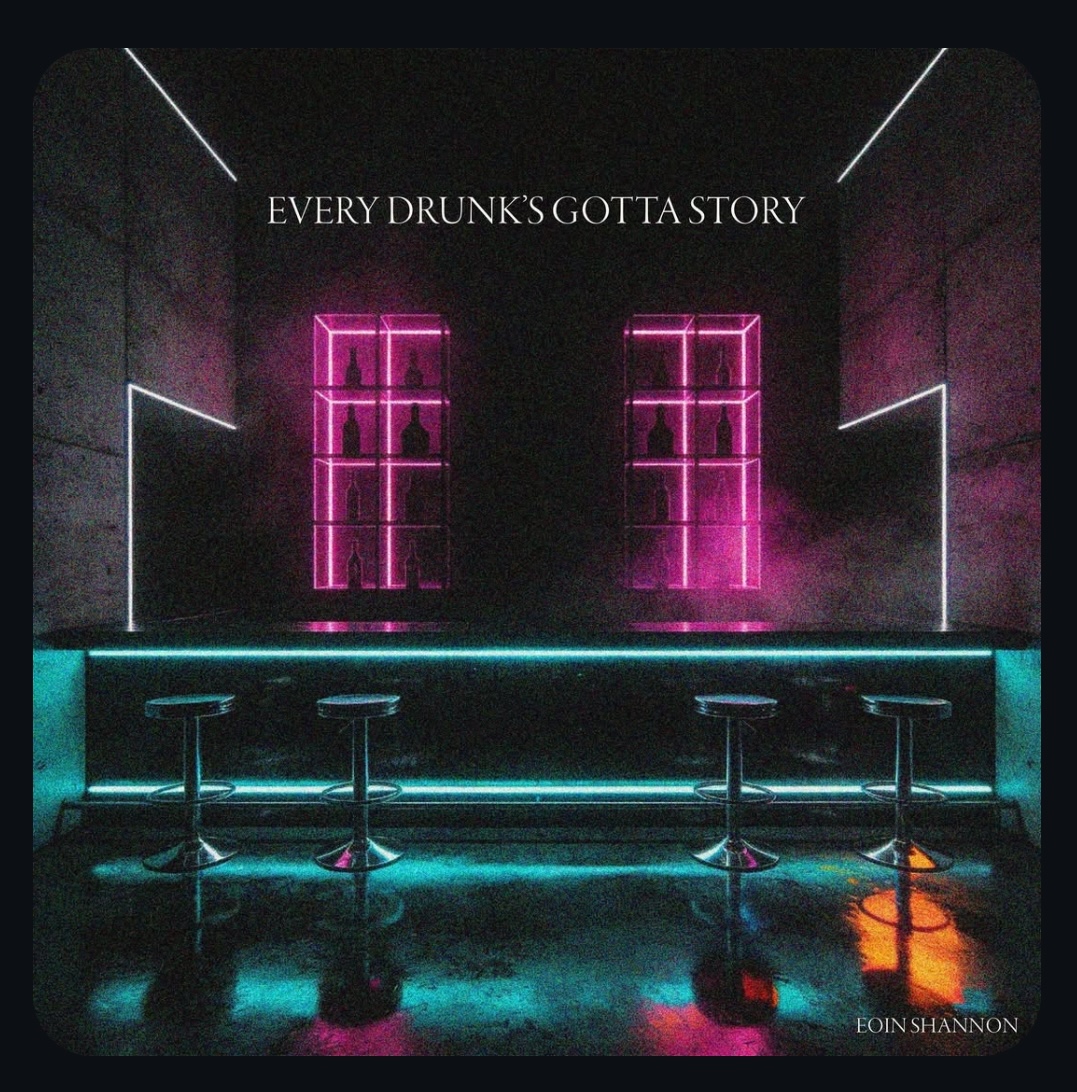
I also love the album artwork by Simon Gatzwiller. For the last two albums, I used my own paintings. This time, because the album sounded so professional and cinematic, I wanted to use a professional, and it really fits the overall vibe.
FVMusicBlog March 2026
Your music deserves more than $0.004 per stream… Get our FREE guide – instant download.
If you would like to submit your music for a playlist or review consideration, please submit here.
Also! Check out the awesome other artists on the ‘Discovered This Week’ Playlist!


Leave a Reply