
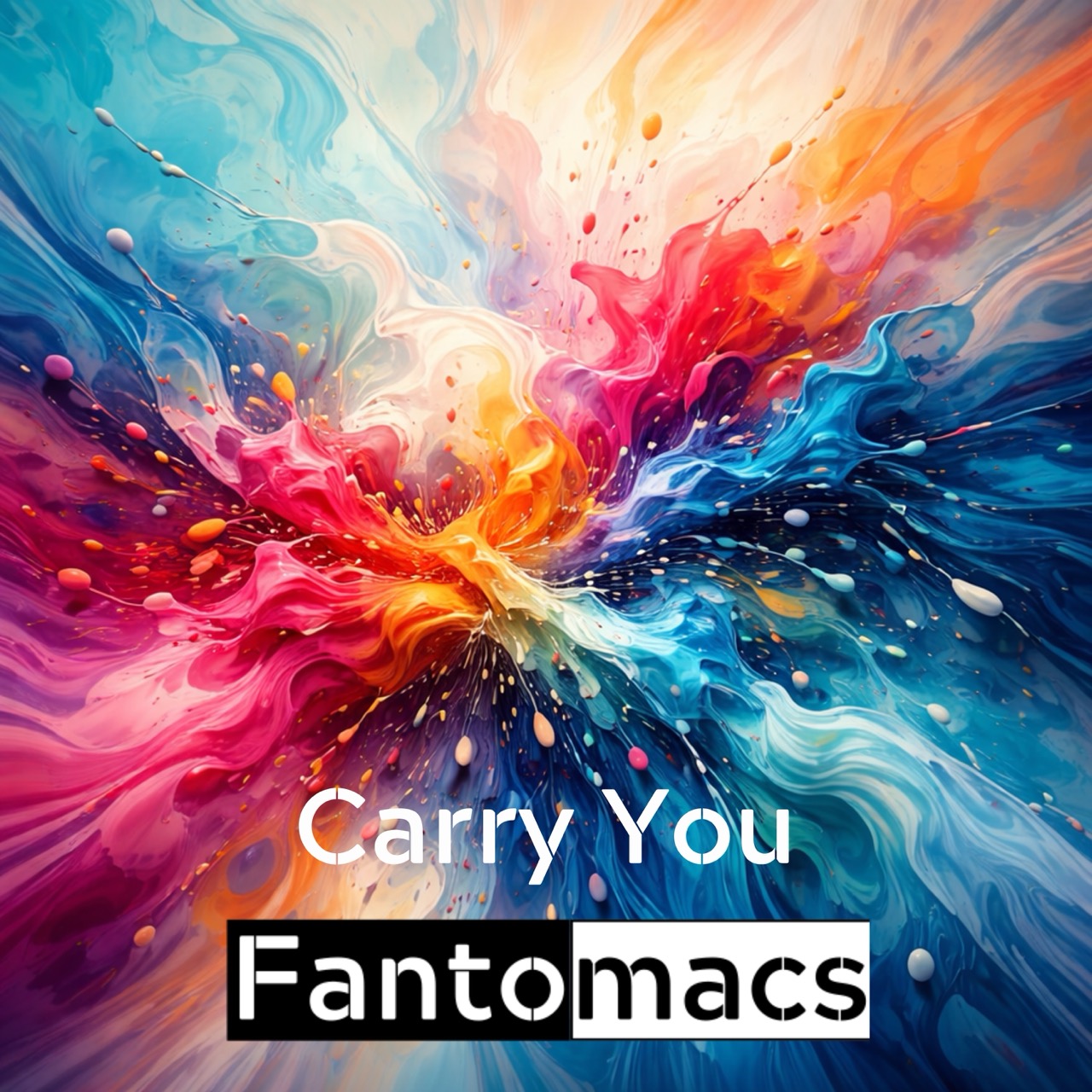
Photo: Fantomacs
Switzerland-based producer Fantomacs returns with Carry You, a contemporary dance rework of the 2021 release by Rules (UK), originally written by Maddy Abela and Richard Samuel Smith. Released digitally on 28 February 2026 via RecordJet (Berlin), the single reframes the emotionally direct original through Fantomacs’ signature lens: electronic precision balanced with human warmth.
Rather than treating the cover as a novelty, he rebuilds it with restraint and intent — preserving the song’s core while giving it new physical momentum. The result is a version designed equally for late-night speakers and solitary headphone moments, where movement and meaning exist side by side.
What was it about the original “Carry You” by Rules (DJ, UK) that resonated with you deeply enough to reinterpret it, and how did you know you could bring something new to a song already rooted in such emotional honesty?
What pulled me in first was the contrast in the original: it’s emotionally direct and unguarded, yet it still has that forward motion that makes you want to move. Rules captured a kind of quiet bravery in the vocal line and lyric — like someone choosing hope while they’re still in the middle of the hurt. That honesty felt untouchable in the best way, so I didn’t want to “improve” it. I wanted to frame it differently so the same feeling could land in another room.
I knew I could bring something new because my world, as Fantomacs, lives in the tension between intimacy and energy — cinematic textures, deeper low-end, and a groove that can lift without turning the emotion into a cliché. My approach was simple: keep the heart (the melodic contours and the lyrical weight) but rebuild the surroundings — more spacious synth atmospheres, a tighter modern dance pulse, and subtle harmonic colors that create a sense of ascent.
In the end, my version isn’t a reinvention of the story — it’s the same story told with a different light: less “confession in a corner,” more “release on a night drive,” where the chorus becomes that moment you finally breathe.
The song was originally written by Maddy Abela and Richard Samuel Smith — how did you approach honoring their songwriting while reshaping the production into your own sonic language?
My first rule was: don’t touch what makes it human. Maddy Abela and Richard Samuel Smith wrote a song that works even if you strip everything away — melody, lyric, and emotional arc are already complete. I treated the songwriting like a finished sculpture and focused on building a new space around it rather than carving into the core.
Practically, that meant keeping the melodic phrasing and the tension-release points intact — especially the way the chorus arrives and how the lyric lands on those key lines. I mapped the dynamics of the original: where it holds back, where it opens up, where it needs air. Then I translated those moments into my own language as Fantomacs — cinematic synth atmospheres, a deeper low-end, and a dance pulse that feels uplifting without flattening the vulnerability.
I paid close attention to texture and restraint. Instead of stacking flashy elements, I used detail — subtle harmonic color, controlled reverb spaces, and rhythmic accents — to support the story. The goal was that the songwriters would still recognize their work immediately — just wearing a different suit: more nocturnal, more immersive, and designed to carry that emotional honesty onto a bigger dancefloor without losing its truth.
The central promise, “If you carry me, I’ll carry you,” speaks to mutual strength and emotional reciprocity — how did you translate that lyrical intimacy into arrangement, dynamics, and sonic movement within your version?
That line feels like a vow made in real time — two people trading weight, trust, and breath — so I wanted the production to behave the same way: a constant exchange between support and lift.
In the arrangement, I translated “carry me / carry you” into call-and-response motion. The verses are intentionally more exposed — less density, more air — so the vocal idea feels close, almost conversational. Then the chorus widens the frame: the groove becomes more confident, the harmonies open up, and the low-end arrives like a second set of hands underneath the song. It’s not bigger for the sake of bigger — it’s bigger because the message becomes shared.
Dynamically, I leaned into push and pull. I let the track dip right before the chorus so the return feels like someone being caught. You hear tension building in subtle ways — rising synth tails, a heartbeat-like pulse, small rhythmic lifts — and then the drop isn’t a harsh impact, it’s a release. Reciprocity isn’t explosive, it’s dependable.
Sonically, the stereo image gradually expands as the promise becomes clearer. Textures evolve from soft, intimate layers to more luminous, driving elements. The track starts close and fragile, then slowly transforms into something that can hold more weight — until it feels like the song itself is doing what the line says: lifting you while letting itself be lifted.
Your rework transforms a reflective pop track into a contemporary dance piece — what specific production choices allowed you to balance vulnerability with forward-driving momentum?
I treated the track like it needed two engines running at once: one for emotional closeness, one for motion. The dance elements feel supportive rather than aggressive — the groove carries the lyric instead of overpowering it.
Tempo & Pulse: I nudged the tempo into a club-ready range and built a steady, confident pulse without making it punishing. The kick is tight and consistent, while the breath comes from micro-pauses, short drop-downs, and small dynamic swells that keep vulnerability intact.
Rhythm Structure: The foundation is a clean four-on-the-floor framework, but the emotional shape lives in the syncopation — off-beat hats, understated ghost notes, and percussion that arrives in stages. The groove gradually gains complexity as the lyric becomes more declarative.
Synth Textures: I used two contrasting texture families. Intimate layers — warm pads and midrange tones — sit close to the vocal space. Kinetic layers — plucks, pulses, subtle arpeggiations — create propulsion during key sections. Filtering and automation allow brighter elements to bloom mainly in the chorus, while verses stay muted and personal.
Harmonic Layers: The chord language remains emotionally clear, but subtle tension tones and voicing shifts create forward movement without distracting from the story.
Sax Solo: Physical sax models from Audio Modelling were performed using an expressive Roli keyboard and enhanced dynamically with a breath controller.
Overall, momentum comes from groove, evolving texture, and dynamics — while vulnerability remains because there’s always space and warmth around the vocal.

The press release references December memories and unfinished goodbyes — were you consciously scoring a specific emotional scene?
Yes — very consciously.
I imagined it like a small film scene that happens after the moment everyone expects. Late December. Cold air. Streetlights reflecting on wet pavement. Two people have said what they needed to say, but they’re not fully finished — because the hardest part isn’t the goodbye, it’s the silence after it.
One of them walks home alone, phone in hand, replaying the last conversation, half-hoping for a message that won’t come — yet still feeling the warmth of having been understood. The memory hurts, but it steadies you.
That’s why the production feels like a moving camera shot: verses as close-ups — breath, detail, vulnerability — and the chorus as the wider frame where the city opens up and the body keeps walking. The energy isn’t party energy. It’s forward motion with a heavy heart.
As the sole producer, mixer, and mastering engineer, how does maintaining complete creative control affect the emotional precision of the final track?
Complete control gives me emotional continuity. I’m not handing the feeling off halfway through the process — I’m protecting one intention from the first sound choice to the final loudness decision.
That continuity allows constant recalibration: Does this still feel like the promise in the lyric? If the groove becomes too polished and vulnerability fades, I pull it back. If it’s too delicate and stops moving forward, I push the energy.
Independence encourages risk-taking early — unusual textures, bold dynamics — and refinement later. The risk is artistic. The refinement ensures it translates across speakers and platforms. The goal is not just a finished track, but a truthful one.
Your work blends electronic, jazz, ambient, funk, and orchestral elements — how did those influences shape “Carry You”?
They operate subtly — like fingerprints rather than headlines.
Ambient influence shapes the emotional glue: evolving pads, long tails, space that keeps vulnerability present. Jazz appears in voicing and phrasing — harmonic color that resolves naturally and prevents the groove from feeling mechanical. Funk lives in the pocket — bass and drums that are tight but human, with subtle rhythmic nudges. Orchestral thinking informs the narrative arc — motifs introduced gradually, stereo width expanding in chapters.
It’s dance music that still tells a story.
How have Berlin and Switzerland shaped your approach to electronic music?
Berlin taught me groove as language — repetition as hypnosis, restraint as power, honesty in minimalism. Switzerland shaped my sense of space and atmosphere — wider stereo images, arrangements that breathe, clarity in emotional arcs.
Together, they form the balance I chase: forward-driving momentum with cinematic calm. In “Carry You,” the groove stays confident while the production leaves room for intimacy.

This release comes via RecordJet — what does that represent for you creatively?
Working with RecordJet connects me back to my Berlin roots. It keeps that identity grounded even while I’m based in Switzerland.
Creatively, this stage represents refinement. I’m not chasing new sounds — I’m consolidating a signature: electronic music with warmth, cinematic depth, and a human pulse. “Carry You” reflects that focus — strong storytelling, intentional aesthetics, and a coherent world around each release.
How does “Carry You” expand the Fantomacs vision, and where is your sound heading next?
“Carry You” deepens the cinematic side of Fantomacs within a dance-first framework. It’s emotional electro that moves your body while keeping the human promise intact.
Cinematic depth, to me, isn’t about scale — it’s about dimension. Intimate moments sit beside wide, immersive sections. That contrast is the signature I’m refining.
It signals a direction that blends dance energy with narrative pacing, groove with emotional weight, and production that feels like a soundtrack to real life. The next chapter continues that path — club momentum with even stronger storytelling and atmosphere at its core.
https://www.fantomacs.de
https://www.facebook.com/fantomacsmusic/
https://fantomacs.bandcamp.com/music
https://www.youtube.com/@fantomacsmusic
https://www.instagram.com/fantomacsmusic/
https://www.tiktok.com/@fantomacs
FVMusicBlog February 2026
Your music deserves more than $0.004 per stream… Get our FREE guide – instant download.
If you would like to submit your music for a playlist or review consideration, please submit here.
Also! Check out the awesome other artists on the ‘Discovered This Week’ Playlist!

Leave a Reply