
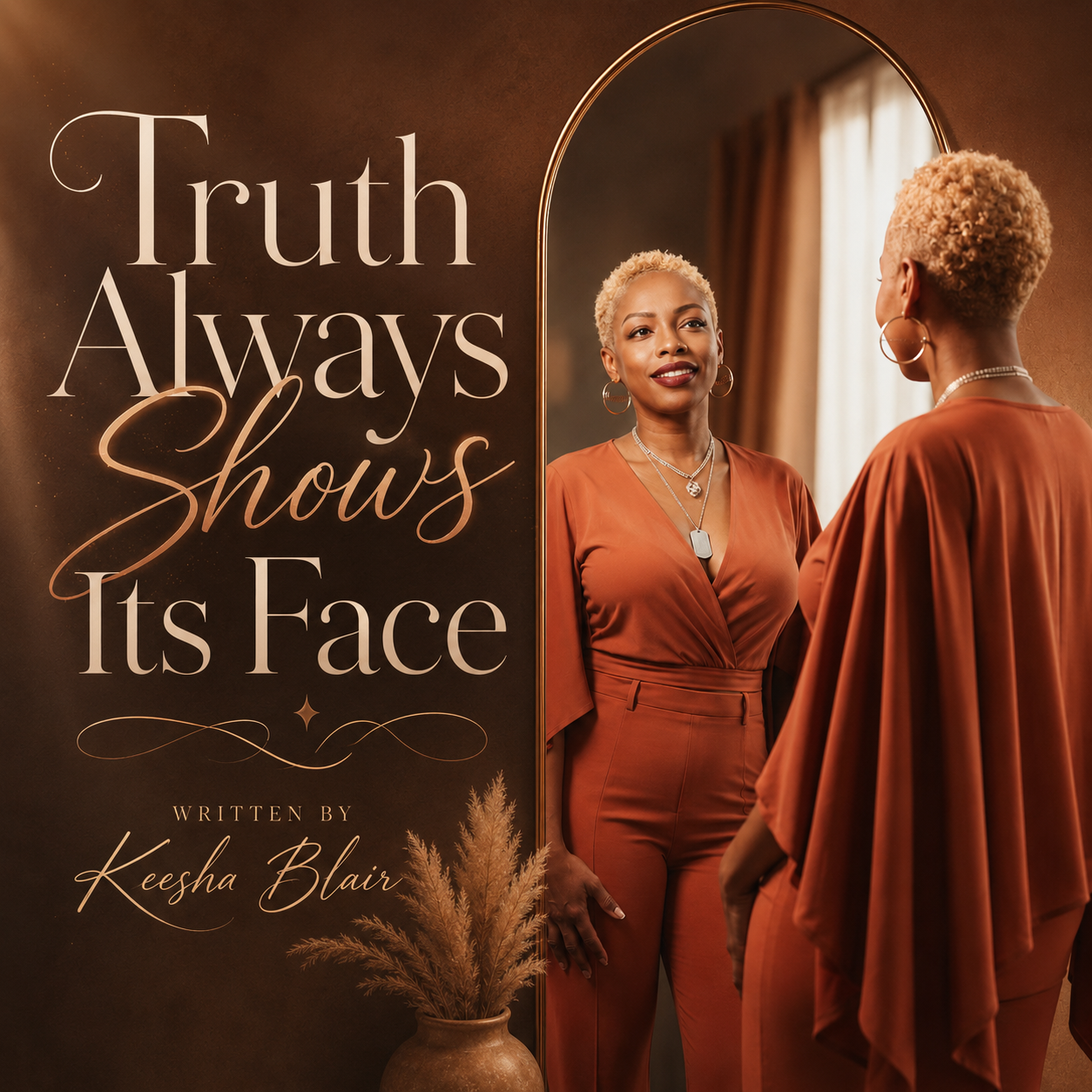
Photo: Keesha Blair
Interview: Keesha Blair on Truth Always Shows Its Face, Healing, and the Power of Self-Honesty
Truth Always Shows Its Face is the latest release from songwriter and creative director Keesha Blair, an artist whose work explores healing, emotional honesty, and personal transformation. Through Divine Purpose Music, Blair creates reflective songs that encourage listeners to reconnect with themselves, embrace self-acceptance, and trust their own inner voice. Blending soulful R&B and neo-soul influences with thoughtful lyricism, Truth Always Shows Its Face invites audiences to reflect on the role truth plays in their lives and the freedom that comes from self-honesty.
In this interview, Keesha shares the personal experiences that inspired the single, her creative process, and how she combines songwriting with AI-assisted music production while remaining transparent about her approach. She also discusses the importance of creating music that offers listeners a safe space for reflection, healing, and emotional restoration, revealing the deeper purpose that continues to shape both her artistry and the future of Divine Purpose Music.
Congratulations on the release of Truth Always Shows Its Face. Can you tell us about the inspiration behind the single and what first sparked the idea for the song?
Thank you so much. “Truth Always Shows Its Face” was inspired by my own journey through belief, questioning, healing, and self-honesty. The opening question, “Do we believe because it is true, or is it true because we believe?” came from my journey through religion, spirituality, and now simply practicing love, self-acceptance, and intense self-honesty.
I had many questions along the way, but I was often encouraged to accept certain things as truth without questioning them. That never sat right with me. Over time, I realized that truth does not need fear, control, or blind loyalty to survive. True love can withstand questions, and I believe it even welcomes them. That realization became the foundation of the song.
Truth, healing, and self-trust are at the heart of this release. Why were these themes so important for you to explore through your music?
These themes are important because they have been part of my own healing. I believe many people are carrying emotions they have not had the space, language, or safety to process. Music has a way of reaching places that ordinary conversation sometimes cannot.
For me, healing begins with self-honesty. It is not about pretending we never lie or that honesty is always simple. It is about knowing where the truth lives within ourselves. When we can become honest with ourselves first, we create space for healing, clarity, and self-trust to grow.
The song speaks about the moment when honesty becomes freedom. Was there a particular life experience or realisation that influenced this message?
It was not about one single moment. It was about recognizing a pattern within myself. I began to realize that sometimes lies are wrapped in hope. There were times when I wanted to believe what someone was telling me because of how beautiful it would have been if it were true. But deep down, I already knew.
I learned that I could often feel a lie before the truth was fully revealed. The difficult part was admitting that I sometimes went against my own knowing because I wanted to believe the other person. Every new lie diminished that hope until the pain, doubt, and humiliation became undeniable. That is reflected in the lyric, “I kept a quiet faith in the back of my mind, but each new lie left some doubt behind.”

The deeper realization was that my feeling of betrayal was not only about another person’s deceit. It was also about my own self-betrayal. I knew something was not true, yet I abandoned my own knowing in order to believe it. That is where the lyric, “I touched the truth through the ache of a wound, and I felt my own name in the darkest room,” became so meaningful to me.
That realization broke the pattern and created space for healing and empowerment. It helped me understand that truth does not necessarily arrive as punishment. Sometimes truth comes to rescue us from the places where we have been hiding from ourselves. It shows up to support us, reveal alignment, and guide us back to what is real.
Through Divine Purpose Music, your work focuses on healing and emotional restoration. How do you hope listeners will connect with Truth Always Shows Its Face on a personal level?
I hope listeners connect with the song as both a mirror and a grounding space. I do not want anyone to feel pushed or judged by it. I want the song to feel like a quiet invitation to pause, breathe, and listen to what they already know within themselves.
I also believe there is something sacred about the private way people experience music. Someone can be alone in their room, in their car, or in a quiet moment with headphones on, and the song can reach a place they may not feel ready to share with another person yet. That private safety can allow emotions to rise, release, and move through the body without pressure or explanation.
For me, that is part of the healing power of music. It can meet people gently, without requiring them to perform their pain or explain their process. Sometimes a song can hold space for someone before they are ready to speak.
Through Divine Purpose Music, my intention is to create songs that feel affirming, emotionally honest, and grounding. With “Truth Always Shows Its Face,” I hope listeners feel seen and supported as they reflect on their own truth with compassion.
Your creative process combines songwriting, concept development, and AI-assisted music production. How do these different elements come together to transform an idea into a finished release?
My creative process usually begins with a message, a question, a title, or an emotional truth that is asking to be explored. From there, I develop the concept, shape the lyrics, and guide the overall feeling of the song.
As a songwriter and creative director, I use AI-assisted music production as a supportive part of the creative process. It helps me bring the emotional world of the song to life while keeping the heart of the work centered on the message. I focus on the story, lyrical direction, emotional tone, vocal feel, arrangement, and atmosphere so that every element works together in service of the song.
I also believe transparency is important when AI-assisted production or visuals are part of a release. Some people have firm boundaries around AI in music and art, and I respect that. I do not have to share the same belief in order to honor someone’s boundary. For me, being clear about my creative process allows people to decide what aligns with them.
The production has a smooth, reflective R&B/neo-soul feel. How did you approach creating a sound that complements the emotional depth of the lyrics?
I wanted the sound to feel spacious, soulful, soothing, and emotionally honest. Because the message invites deep self-reflection, I did not want the production to overpower the meaning. I wanted it to create a sense of safety around the listener.
Your music deserves more than $0.004 per stream… Get our FREE guide – instant download.
In my experience, people are more willing to answer difficult questions freely and honestly when they feel safe enough to do so. That shaped the way I approached the sound. The contemporary soul and neo-soul elements helped create warmth, while the slower, more introspective feel gave the words room to breathe. I wanted listeners to feel like they were having a private conversation with themselves, where they could question, answer honestly, and be gently invited into reflection.
Many artists use music as a way of telling stories, while others see it as a form of personal therapy. Where does songwriting fit into your own life, and what does it allow you to express that words alone cannot?
Songwriting is both storytelling and healing for me. It gives shape to emotions that may be difficult to explain in ordinary conversation. Sometimes I understand what I feel more clearly after I hear it in a lyric.
Music allows me to express tenderness, grief, strength, truth, and transformation in a way that feels safe and spacious. Words alone can explain an experience, but music helps carry the feeling of it. That is what makes it so powerful for me.
The title, Truth Always Shows Its Face, is both powerful and thought-provoking. What does that phrase mean to you, and what do you hope listeners take away from it after hearing the song?
To me, “Truth Always Shows Its Face” means truth does not have to be chased or forced. Truth also does not chase us. It has a way of revealing itself when the masks are removed and we become willing to meet ourselves honestly.
Sometimes we think we are running from truth, but we may actually be running from the moment the lie can no longer hold. That is where authenticity begins. It asks us to stop performing, stop explaining away what we already know, and trust the quiet honesty within us.
I hope listeners take away the reminder that self-honesty is healing. Our full truth is not always owed to another person, but we do need to know where it lives within ourselves.
Your music encourages listeners to embrace personal growth and emotional clarity. Have you received any feedback from listeners that has particularly resonated with you or reinforced your mission as an artist?
Yes. What has moved me most is hearing that the song resonates with people in a very personal way, including people who know me and listeners who do not. Some have connected deeply with the honesty of the message, especially the parts about truth, self-awareness, and trusting what we already know inside.
That kind of feedback reinforces my mission because it reminds me that music can create connection without forcing conversation. When someone feels seen or understood through a song, that means the message reached the place it was meant to reach.

Looking ahead, what can listeners expect next from Keesha Blair and Divine Purpose Music, and how do you see your artistic journey continuing to evolve?
Listeners can expect more music rooted in healing, self-love, self-acceptance, integration, self-honesty, emotional grounding, and personal transformation. I want to continue creating songs that feel reflective, affirming, and honest, while also expanding Divine Purpose Music as a space for intentional music experiences.
My artistic journey is evolving into more than releasing songs. It is becoming a way to support reflection, restoration, and self-connection through music. I see Divine Purpose Music continuing to grow as a place where creativity, healing, and purpose meet, while offering listeners music that helps them feel grounded, seen, and connected to themselves.
https://Divinepurpose.music
https://www.facebook.com/DivinePurposeMusicByKeesha/
http://www.youtube.com/@KeeshaBlairVEVO
https://www.instagram.com/divinepurposemusicbykeesha/
https://www.tiktok.com/@dpmkeeshablair
FVMusicBlog June 2026
If you would like to submit your music for a playlist or review consideration, please submit here.
Also! Check out the awesome other artists on the ‘Discovered This Week’ Playlist!



Leave a Reply