
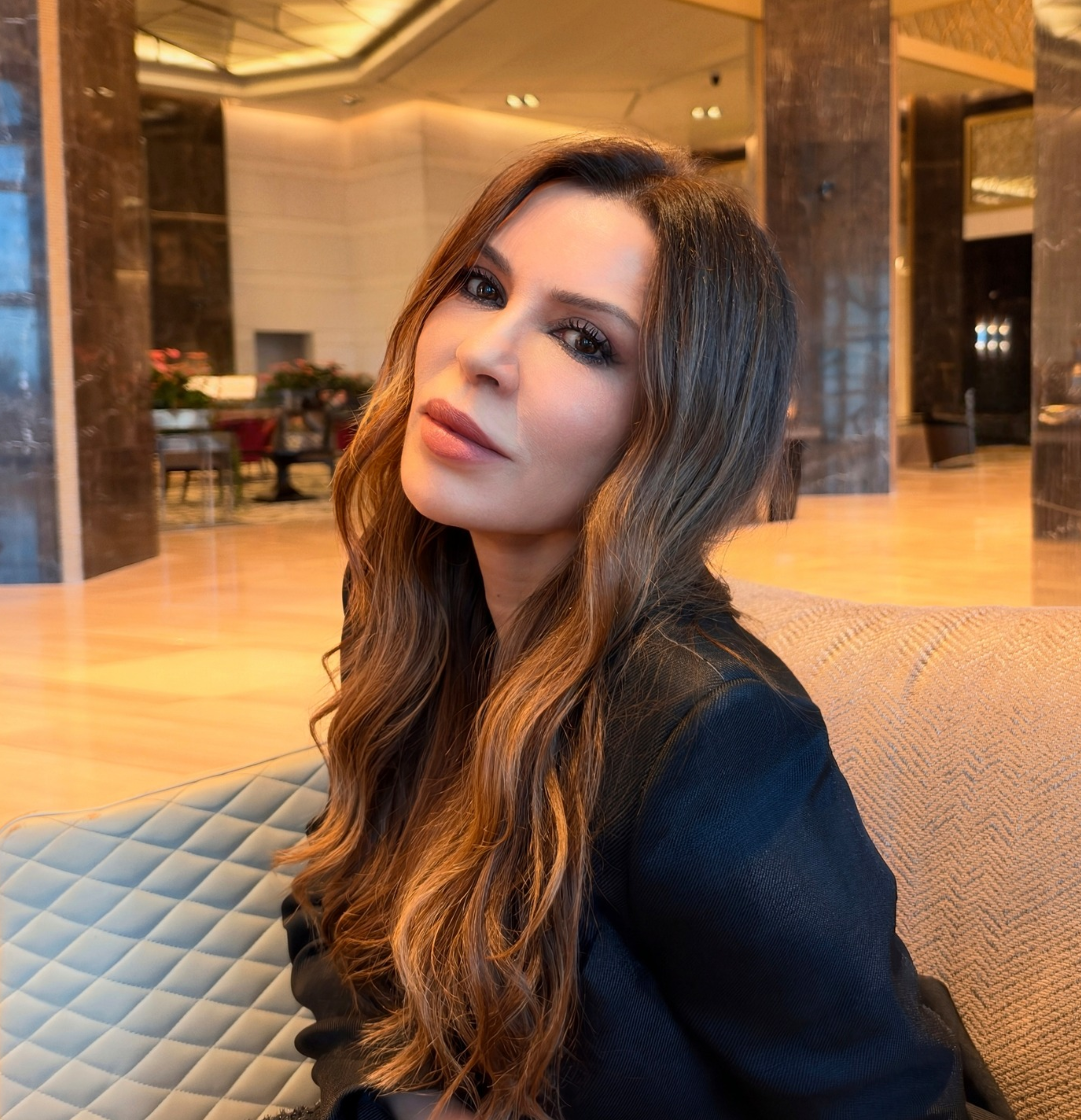
Photo: IRONA
IRONA Interview – The Love, Courage and Cherished Companion Behind ‘JACK, LET’S GO FOR A WALK (CELLO WHISPER)’
For international contemporary artist IRONA, a simple invitation to walk becomes a turning point in a story about love, waiting and choosing to move forward. Her single ‘JACK, LET’S GO FOR A WALK (CELLO WHISPER)’ brings voice, piano, cello and silence into a composition whose central character draws on her bond with a cherished white German Shepherd.
A Londoner with a creative journey spanning different countries and disciplines, IRONA describes her work as “contemporary art in sound”. We spoke about the emotional complexity behind ‘JACK’, its musical and visual landscapes, and her hopes for what art can make possible.
A Creative Life Across Cities and Disciplines
For readers discovering IRONA for the first time, how have your experiences in New York and London shaped the artist you are today?
I’m from Hampstead, London, and both London and New York are important parts of my life.
Living and working across different cities and cultures has given me a curiosity about people, art and the many ways we express ourselves. My journey has taken me through several disciplines, including design, healthcare, finance and the arts, and I believe each has contributed something to how I see the world.
What I appreciate most about London and New York is their extraordinary creative diversity. They have encouraged me to remain open to different artistic languages rather than define myself through one particular style.
Perhaps that’s why I approach music the way I do. To me, it’s another form of contemporary art, with endless possibilities for expression.
The Love That Remains When Waiting Ends
Your single ‘JACK’ explores love that remains even when a future together becomes impossible. What first inspired you to turn that feeling into a song?
I was fascinated by an emotional contradiction: how can we continue loving someone when we already understand that the future we imagined together may never exist?
I wrote the foundations of JACK many years before its release. The feelings behind it remained meaningful to me, and I wanted to give them a musical form.
What interested me wasn’t the conventional story of a relationship ending. It was the moment that comes afterwards, when someone understands that continuing to wait is no longer possible.
Love doesn’t necessarily disappear when a relationship ends. Sometimes we carry it with us, and perhaps it even changes who we become.
JACK is about that quiet moment when a woman chooses to move forward without denying the love she still carries.
The title sounds like a simple, everyday invitation, yet it carries considerable emotional weight. What does going for a walk represent within the story, and how did you choose the name Jack?
Jack was actually my dog, a magnificent, enormous white German Shepherd. He was extraordinarily intelligent, genuinely one of the smartest dogs I have ever known.
I love all dogs: those who have shared my home, those I’ve fostered and those I have encountered across the world. But Jack and I shared a particularly profound bond. He was truly unique.
And in many ways, this composition carries his soul, too.
Within the story, Jack also represents something much larger: the innocent third soul whose life becomes intertwined with the relationship between two people.
When someone leaves, the consequences are rarely experienced by just the couple. There may be others who loved, waited and hoped alongside them. The woman gradually realises that her own waiting has become Jack’s waiting too. His happiness has become entangled in a situation he never chose.
And so she turns to him and says, “Let’s go for a walk.”
It’s such an ordinary invitation. Yet within those few words lies an extraordinary decision. She is choosing to move again, for herself and for the innocent soul beside her.
To me, that is where strength becomes courage.
You describe a moment when waiting ends without love disappearing. How did you approach writing that turning point while allowing tenderness and acceptance to exist together?
I don’t believe acceptance is the opposite of love, just as courage isn’t the absence of sadness.
Human emotions are rarely that simple. We can feel love, disappointment, tenderness, gratitude and determination at precisely the same moment. I wanted JACK to preserve that complexity.
Sometimes two people can genuinely love one another and still be like oil and water. Their perspectives, cultures, experiences or expectations may be so different that, however much they try, they cannot find a shared rhythm.
Love alone doesn’t always mean that two people can walk the same path. And sometimes, despite all the love in the world, one person simply cannot become what the other hopes they might become.
There is no need for anger or accusations. In JACK’s story, he never changed, and ultimately, he made the decision to leave. Now the woman must make her own decision about how to continue living.
She understands that waiting is no longer affecting only her happiness, but also the wellbeing of someone innocent who depends on her. That changes everything.
Jack may appear to be the simplest character in the story, yet in many ways he is the most complex. He has no part in the decisions being made, but he lives with their consequences.
For me, JACK is not a confession. It is the moment of decision.
He made the decision to leave. She makes the decision to live. Not only for herself, but for Jack, too.
Cello, Piano and the Space Between Words
The cello has a defining presence in this version of the song. What made it the right instrument for ‘JACK’, and what does it express that the lyrics alone cannot?
I’ve always had a particular affection for the cello.
There is something extraordinary about its expressive range. It can carry tenderness, sorrow, warmth and strength, sometimes within a single musical phrase.
When I imagined JACK, I saw autumn, two mountains, distance and the passing of seasons.
I really am a winter person, and autumn holds a particularly special place in my heart. To me, autumn is not simply a season of endings, but also one of awakening and shedding.
Mountains, snow and silence are where I find my energy, particularly my creative energy. Perhaps that is why the cello, with its intensity and extraordinary emotional depth, seemed to belong so naturally to JACK’s landscape.
The lyrics communicate the story and the decision. But emotions don’t always end when the words do. The cello allows those feelings to continue speaking.
It doesn’t simply accompany the voice. In many ways, it becomes another voice within the composition.
Perhaps if those two mountains could speak to one another, they would sound something like a cello, their voices carried across the distance like a breeze.

With an intimate vocal, felted piano and room for silence, the arrangement gives small details space to resonate. How did you decide what the song needed musically—and when to leave space?
I approach musical composition much as I approach visual art. Every element must have a reason to exist.
Sometimes adding another instrument creates depth. At other times, removing something creates a far more powerful emotional moment.
For JACK, I wanted the piano and vocals to feel intimate, almost like a private conversation, while the cello carries the wider emotional landscape.
Silence was just as important.
There are moments in life when words are no longer necessary. We simply need to experience what we’re feeling. I wanted the listener to have that space.
To me, composition isn’t only about deciding what should be heard. It’s also about understanding what should remain unspoken.
At the heart of the composition are just a few simple words: “Jack, let’s go for a walk.” They say so much, yet leave so much unspoken.
Autumn, Handwritten Letters and Two Mountains
Autumn, a letter and two mountains standing apart give ‘JACK’ a distinctive visual world. How did those images develop, and how does the accompanying music film extend the story?
Autumn has always fascinated me because it carries both endings and beginnings within the same season.
A letter represents words that travel across a distance. Sometimes those words arrive too late, and sometimes they remain with us long after the moment has passed.
There is also something deeply romantic about handwritten words. The pen, the ink, the calligraphy, the emotions carried onto a physical page. A letter has texture. It has presence. It leaves something tangible with the person who receives it.
Sometimes, just a few handwritten words can communicate far more than a simple email ever could.
The mountains are particularly meaningful to me. Having spent part of my formative years in Switzerland, mountain landscapes have long been part of my reality and visual imagination.
In JACK’s story, I see the two mountains as two complete individuals. Each has its own history, beauty and identity. From a distance they may appear close, but that doesn’t necessarily mean they share the same horizon.
Neither mountain needs to diminish itself for the other.
The music film allows me to extend these ideas into a visual world. But I don’t want images to dictate precisely what someone should feel. I prefer to leave room for the audience’s own memories and imagination.
Contemporary Art in Sound
You describe your work as “contemporary art in sound”, with sound as your canvas and lyrics as your paint. Can you take us inside your creative process—does a new piece usually begin with words, a musical idea or an image?
There isn’t one formula, which is something I love about creating.
Sometimes an idea begins with a sentence. Sometimes it’s an emotion, an image or a question I cannot stop thinking about. And sometimes it begins with a dream so vivid that I feel compelled to turn it into words.
I write my own lyrics and direct the artistic vision of each composition. I think about the relationship between words, melody, rhythm, instrumentation, texture and silence.
In that sense, I work with sound in much the same way another artist might work with paint, sculpture or installation.
My background in different artistic and professional disciplines has probably made me rather comfortable moving between forms.
I may create it with one emotional intention, yet someone listening on the other side of the world can experience something entirely different.
And both experiences can be equally meaningful.
You’ve said that some listeners have been moved to tears by ‘JACK’. Is there a response that has stayed with you or revealed something about the song you hadn’t considered?
What has touched me most is discovering how differently people experience the same composition.
Some listeners connect JACK to a relationship that ended. Others seem to recognise something more complicated: the memory of a love that continues to shape them long after their lives have taken different directions.
I find that deeply moving.
Sometimes, perhaps, we don’t only remember the person we loved. We also remember who we became through loving them. And sometimes, we even miss the person we were when we loved them.
And I would never presume to know exactly what someone’s tears mean.
Music can awaken memories, gratitude, longing or emotions we haven’t thought about for years.
The composition may be mine, but the experience it creates belongs entirely to the listener.
That, to me, is one of the most beautiful possibilities of art.

Compassion and the Possibilities Beyond Music
Your single ‘GLORIOUS’ supported animal welfare, and you’ve spoken about turning art into purpose. As you build the wider world of IRONA, what would you like your music to make possible, both creatively and beyond it?
I’ve always believed art can have many purposes.
Sometimes it simply gives someone a moment of happiness. Sometimes it offers comfort or awakens a memory. And sometimes it encourages us to look at the world, or another living being, with greater compassion.
Not every composition needs to carry a social message. I want the freedom to explore different emotions, stories and artistic worlds.
But compassion has always been an important part of who I am, particularly towards animals, children and those who cannot easily protect themselves.
GLORIOUS reflects that part of my life.
As IRONA grows, I hope to create increasingly ambitious musical and cinematic works, while also finding meaningful ways to support the causes closest to my heart.
Recognition is wonderful when it allows an artist’s work to reach more people. What interests me most is what that reach might eventually make possible.
If my art can move someone emotionally and, in its own way, contribute to something good beyond the music, that would mean a great deal to me.
Discover ‘JACK, LET’S GO FOR A WALK (CELLO WHISPER)’
Thank you to IRONA for sharing the ideas and cherished relationship behind ‘JACK’. Her account of the composition gives its everyday invitation a deeper significance, connecting a woman’s decision to move forward with her responsibility towards the companion beside her. From the cello’s expressive role to the visual language of mountains and handwritten letters, each element offers another way into that moment.
Explore ‘JACK, LET’S GO FOR A WALK (CELLO WHISPER)’ and its accompanying music film to experience how IRONA brings those musical and visual ideas together.
https://www.ironaworld.com
https://www.facebook.com/ironaworld/
https://x.com/IRONA_World
https://www.instagram.com/ironaworld/
FVMusicBlog November 2026
If you would like to submit your music for a playlist or review consideration, please submit here.
Also! Check out the awesome other artists on the ‘Discovered This Week’ Playlist!

Leave a Reply