
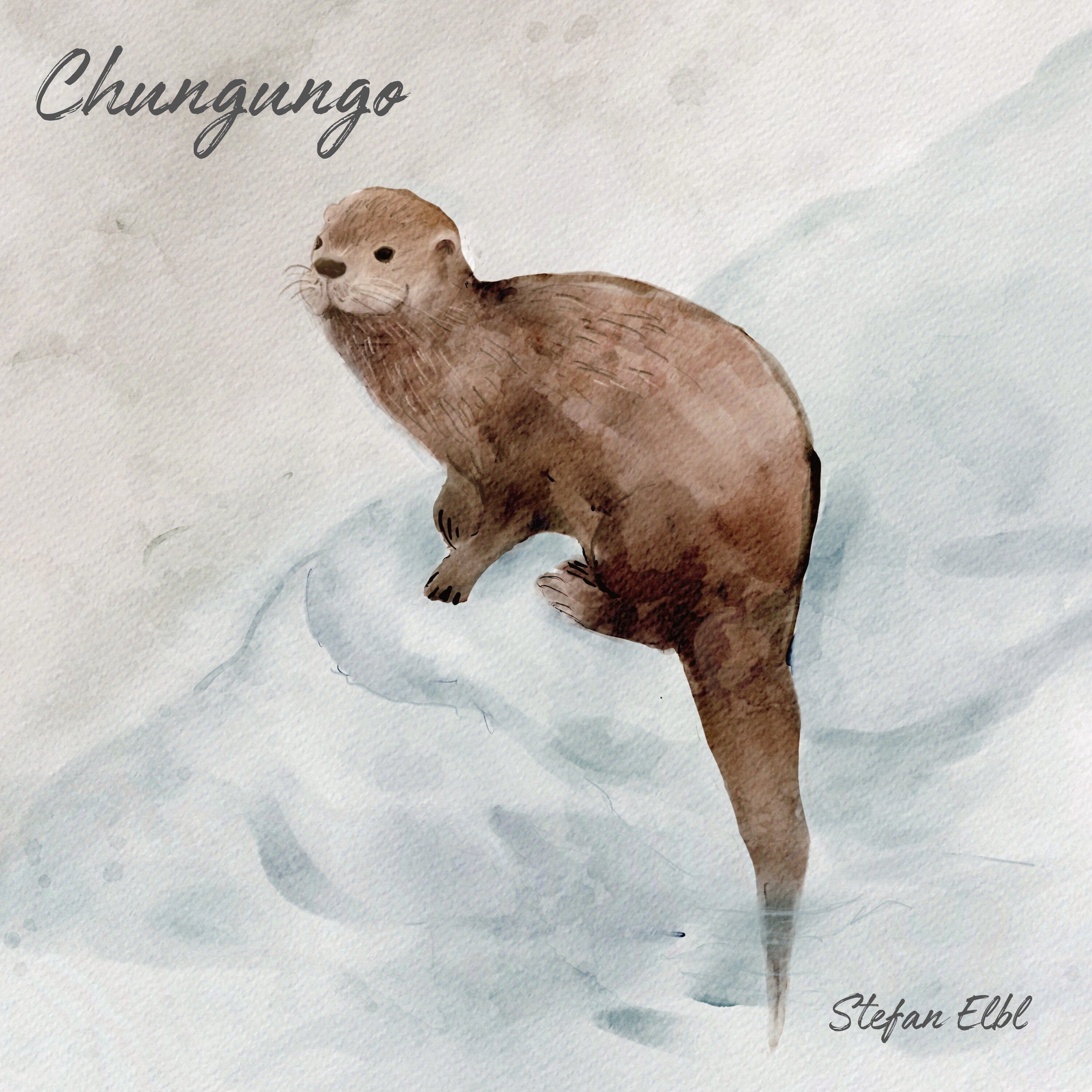
Photo: Stefan Elbl
Chilean artist Stefan Elbl returns with Chungungo, his eighth studio album and arguably his most fully realised work to date. Recorded between Quilpué, Chile, and the San Francisco Bay Area, the record blends raw guitar energy with intricate vocal arrangements, drawing influence from classic rock while remaining deeply personal in its themes. At the heart of the album lies the chungungo — an endangered Chilean marine otter — serving as a striking metaphor for fragility, adaptation, and the emotional weight of starting over in new environments.
Across ten tracks, Elbl explores relocation, growth, and the tension between vulnerability and resilience, all while showcasing the evolution of his musicianship over the past decade. From DIY bedroom recordings to full studio production, Chungungo captures an artist stepping confidently into his prime — both creatively and personally — without losing the honesty that defines his work.
Chungungo is your eighth album — how does this record represent where you are now, both musically and personally, compared to your earlier work?
I think Chungungo is the culmination of a decade of work since my first release: Carretera Norte. The most obvious example is the audio quality: I recorded the vocals for Carretera Norte with a cheap mic in my bedroom, and had to use electronic instruments because I had no money to afford actual instruments. For Chungungo, I had the opportunity to go into the studio and work very hard with sound engineers to reach the sound I wanted.
Musically, I think I am in my prime as well. I am a way better musician than I used to be. My vocals are the prime example, with both an increase in range and quality of my notes. Some of my friends who listened to the album could not believe I was doing both the lows and highs in some of the songs.
Personally, I am in a great place as well. I graduated from my PhD, have a job I like and I am married to my best friend. Contrary to the typical idea of the “suffering artist”, I think being in such a secure situation helps my ideas and art flourish.
The chungungo, an endangered Chilean marine otter, is a powerful central metaphor on the album. What drew you to that image, and how does it connect to your own experience of relocation?
I first saw a chungungo in person when traveling through Chiloé (south Chile) with my wife. I was mesmerized by that little creature that looked like a cat, and was distraught when I heard they were endangered.
Within the context of the album, the chungungo is a metaphor for the frailty of beautiful things: if we do not take enough care of them, they might eventually fade away. I think the same goes for relocation: you might be very well off in your current place, but once you move somewhere else you have to start over and it’s rough. In my particular case, I was very well off back home, so moving somewhere else was a risk. Thankfully, it paid off.
You recorded the album between Quilpué and the San Francisco Bay Area. How did those two environments shape the sound and feel of the record?
We recorded the instrumentals of Chungungo across four days at Dackel Audiovisual Studios in Quilpué, which is co-owned by the drummer of the album and a very dear friend of mine: Felipe Montes. We had a lot of leeway in being loud and achieving the sound we were going for. For guitars, we spent two days recording at an obscenely loud volume, which is why the distorted guitars sound so powerful in the album. Felipe also had brilliant ideas for arrangements and embellishments like the tambourine in ‘Torres de Papel’ and the soft arpeggios towards the end of ‘Rápido’.
I think us Chileans are quite resourceful, and we always manage to come up with a creative solution to problems, and you can hear that in some of the ways we approached the record. For example in ‘Tormenta’ there is a thunder-like sound, which we created by shaking a sheet of metal very loudly.
Given the album’s theme of relocation, I think it is quite appropriate that I recorded it both in Chile where I am from and in the Bay, where I currently reside. Recording in the Bay, with my own gear, gave me the chance to experiment with the vocal arrangements. I had never done subharmonics before (which you can hear more prominently in the sixth track ‘Quebrado’), and I think I would have not been as comfortable in pushing my boundaries if I had recorded at a commercial studio with people I did not know.

There’s a strong theme of adapting to new environments running throughout Chungungo. Was there a specific moment or experience that sparked this direction?
Every now and then I sit down and write a song, sometimes I know exactly what I want to do with it in the context of an album, and sometimes it lays dormant for a while. Chungungo is mostly a collection of unfinished instrumentals that I had not realized would work so well together.
The theme of adaptation came when I finished the demo for “Rápido”. I remember sitting and staring into the wall for a couple minutes in awe of what I had just heard. The song covered so many different sections, but it was not forced. Each part flows naturally into the other. That is when I realized I had a concept for the album and everything came together quite quickly afterwards.
Sonically, the album leans into guitar-driven rock with comparisons to bands like The Who, Faith No More, and Queen. How did those influences shape your approach in the studio?
Faith No More taught me that you can always reinvent yourself as an artist, and that it is ok to not stick to a single formula. You can hear a ton of variation in all of their albums, in particular in King for a Day, Fool for a Lifetime…. I also learnt a lot about their vocal arrangements: I learnt the trick of layering a low vocal that follows the main vocal line from Chuck Mosley, who sang on the first two Faith No More records. Of course, his successor Mike Patton has always been a huge vocal influence of mine and he pushed me to experiment and work hard to expand my range and feel comfortable when doing so.
The Who has motivated my approach towards energy levels, in particular with their basslines. John Entwistle had a very dynamic approach to his playing and that is something that I emulate. Queen influenced the vocal arrangements and layering. They always had a very theatrical, operatic approach to vocals and they felt massive in their records. I try to lean into that idea when trying to add more emphasis to a particular part of a song.
Of course, being a Latin Rock record, I was influenced by some of the great bands of LATAM like Los Prisioneros, Soda Stereo and Los Jaivas. Some of my music has been compared to Los Prisioneros and that is one of the biggest compliments I have received.

The opening track “Torres de Papel” debuted on community radio before the album’s release. What did it mean to you to have that early connection with listeners?
It felt fantastic. I have had my tracks on the radio before, but this was the first time I had a song premiere on air, which gives you some status: you are not just a kid playing in his bedroom anymore, you are an artist who somebody else thought were good enough to broadcast.
To have my song selected as a featured underground artist felt very validating. A big thanks to Beethoven, Da Components and all the crew at KBBF Santa Rosa for promoting local talent.

Your catalogue spans electronic, rock, pop, folk, and metal. How do you decide which direction to take with each project, and what made Chungungo a rock-focused record?
When I first started playing music, I made albums with what I had in hand. The direction reveals itself once I have the urge to record something. I do not like waiting too much for the right moment — I prefer to just move forward and reflect afterwards.
Rock has always been dear to my heart. I consider it my “main” genre. Even when I try to play other genres, a little bit of rock sneaks through. I think rock comes in many flavours, and that is something I wanted to convey in Chungungo: the idea of being able to adapt while maintaining a common thread.
There’s a sense of tension in the album — from unemployment to vulnerability and growth. How important is it for you to reflect real-life struggles in your songwriting?
I think what matters most in songwriting is giving people something to connect to. People bond over shared struggles, so it seems natural that listeners would feel drawn towards a song that conveys that experience.
It’s also ok to be subtle about it — my lyrics are quite ethereal, but I think they build the right atmosphere for the idea I want to express.
Your music deserves more than $0.004 per stream… Get our FREE guide – instant download.
Alongside your solo work, you’re part of Bay Area acts Los Piana and Mango Blast. How does collaborating in bands influence or contrast with your solo creative process?
The main difference to me is the speed of iteration: I like to move fast with my solo releases. With bands, things tend to move slower because you have to reach a consensus.
That comes with a great benefit though — you often get a richer sound. You are not only expressing your own ideas, but also those of your bandmates, and if you are in harmony that can be something really special.
With Chungungo now out in the world, what do you hope listeners take away from the album — especially those going through their own period of change or uncertainty?
I would like listeners to know that it is okay to experience a wide range of emotions. Chungungo — especially the last song, “Rápido” — moves through different energy levels, from frantic to calm.
That journey reflects what you might experience on any given day, and that is perfectly fine. I think a lot of people bottle up what they are feeling, and that is not always the wisest choice.
https://stefanelbl.bandcamp.com/
https://www.elbl.cl
FVMusicBlog May 2026
If you would like to submit your music for a playlist or review consideration, please submit here.
Also! Check out the awesome other artists on the ‘Discovered This Week’ Playlist!

Leave a Reply