
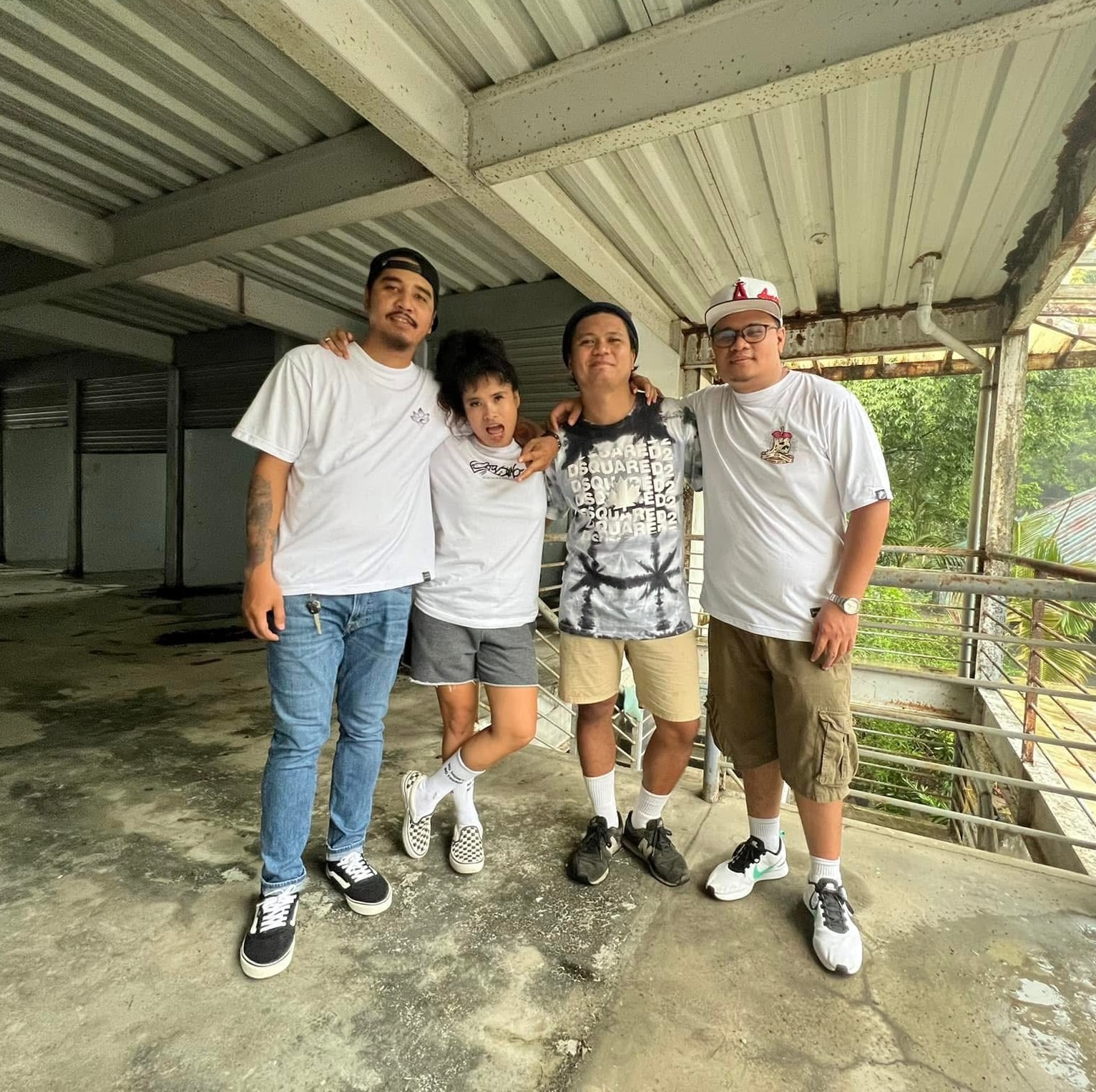
Photo: Psycho Chromatic
Advertisement Feature
This is a paid promotional feature on FVMusicBlog. The artist has paid for this feature to support the promotion of their release.
Psycho Chromatic Interview – Olongapo Roots, Punk Rock and the Friendship Behind Their Debut Album
For Psycho Chromatic, a debut album marks the latest chapter in a friendship that began during high school in Olongapo City, Philippines. Songwriter, vocalist and guitarist Cristie “Tetay” Ermita now lives in Southern California, while her connection with guitarist Kevin Orca continues across countries. With drummer Alexane Valenzuela, bassist Loui Mir Mercado and producer Josh Carcetti contributing to the project, their self-titled album brings together punk rock, ska and reggae influences. We spoke with Cristie, with contributions from Josh, about the communities that shaped the band, writing through migration, and finding room for music alongside a career in nursing.
Growing Up in Olongapo’s Music Community
Cristie, you and Kevin first started playing together as teenagers in Olongapo City. Is there a particular rehearsal, school performance or local gig that captures what those early days meant to you—and something from that time you still recognise in Psycho Chromatic today?
I remember staying after school just to hang out and rehearse. Sometimes, we’d simply go to my house to practice because, well, this girl wasn’t allowed to stay out late! Haha. We also started performing at school events and in our barangay.
As we started forming the band, we began booking rehearsal spaces around the city. One of the places we used to go to was a DIY studio in a building we called SSS. It was an old, worn-out building, but to us, it was a place where we could make music and have fun. After it closed, we moved to Kuya Olay’s rehearsal studio, where so many young musicians went to practice. I also remember Kuya Don from EBB. He was such a cool and patient guy. That place was basically PSYCHO CHROMATIC’s hub! Haha.
There were several rehearsal studios back home, but getting a slot wasn’t always easy because so many musicians were trying to book time. Growing up in the Philippines, we didn’t always have the means to afford our own instruments or proper equipment. We learned to modify things and make whatever we had work. We weren’t thinking about having the best gear. We just wanted to play.
Our first underground show came through Lester of Project Zero. From there, we became involved with JACOS alongside Jerk and other local underground music groups and organizers, including Rock Alley and Ate Maydalyn’s events.
As time went on, we started joining band competitions and were fortunate enough to bring home several wins within our community.
We also want to give a special shoutout to Kuya Augie of Zambaattack. The people of Zambales are truly among the best when it comes to appreciating and supporting musicians. We were welcomed with open arms, and every experience there reminded us how special the underground music community can be.
Great crowd, great people, and unforgettable memories. Much respect and love to everyone who has been part of our journey!
One memory I’m especially proud of is the annual Sibit-Sibit music event in Barretto. We were among the first batch of bands to compete there, and we won first place. That meant a lot because there were so many talented musicians participating. It was an honor just to be part of it.
When I look back, what I recognize in Psycho Chromatic today is that same hunger to make music. We may have grown older and life may have taken us to different places, but that excitement and love for playing are still there. We started with very little, but we had each other and the music.
You describe yourself proudly as a “Batang Gapo”. What did growing up around Olongapo’s musicians teach you about making music, and where can listeners hear that hometown influence on your debut album?
Being a Batang Gapo is something I will always be proud of. Growing up in Olongapo exposed me to so many different kinds of music. I learned that music is beautiful in every genre, and that you don’t have to limit yourself to just one sound to appreciate it.
I loved watching local musicians perform and seeing how they connected with the crowd. That kind of connection is a gift. It’s one thing to play an instrument or sing a song, but it’s another thing to make people feel something and bring them into the music with you.
American rock and roll also played a huge part in shaping my writing. Olongapo and the Subic Bay area have a unique history, including the former U.S. naval presence, which brought a strong American musical influence into the community. Growing up around that exposure helped shape my appreciation for rock and roll.
I think listeners can hear a little bit of all those experiences in our album. It’s not necessarily about trying to sound like one particular place. It’s about the different sounds, people, and memories that helped shape who I am as a songwriter.
Your parents introduced you to rock and roll, and those early influences have stayed with you. Is there a musical lesson or memory from listening with them that still guides how you write a song?
Oh man, one memory that will always stay with me happened when I was around five or six years old. My dad heard me singing one day, and apparently I caught his attention so much that he stopped whatever he was doing just to listen. That moment became one of the earliest memories I have of feeling encouraged to sing.
Both of my parents loved rock and roll, especially the older American rock and roll music. I grew up hearing it around the house, and I believe that exposure became part of me before I even understood what music would mean in my life.
My parents gave me more than just an introduction to music. They made me feel that it was okay to love something wholeheartedly and to express myself through it. I think that still guides me when I write. I don’t want to overthink whether a song is supposed to fit a certain expectation. I just want it to come from somewhere genuine.
I’m grateful that they allowed me to discover that part of myself at such a young age.
Migration, Family and ‘Struggle Into Storyline’
Moving first to Chicago and then to Southern California brought you into different musical environments. Can you point to a song on the album that took shape differently because of something you encountered after moving to the United States?
I would say “Struggle Into Storyline.” It’s a very personal song, and I think many Filipinos and other people who have migrated to another country in search of better opportunities will understand its message.
It’s about an immigrant who works hard, not only for themselves but also for the family they left back home. In Filipino culture, when someone gets an opportunity to improve their life, there’s often a natural desire to help the people they love, too. It’s not always an obligation. It’s something that comes from how we were raised and how we understand family.
I don’t believe everyone is given the same opportunities in life. So, for me, if I rise, I want the people around me to rise, too. If I win, I want everyone to win. I don’t need a lot. I just want enough to live a good life and be able to share what I have.
The song also reflects my childhood and the values I learned from my parents. I remember my mother helping her siblings when they were struggling to raise their children. She stepped in and helped without expecting anything in return. My father was always the cheerleader of our family, encouraging everyone and keeping us going.
Growing up around people like that leaves a lasting impression. As an adult, I realize how much their example shaped the way I see life. Love, helping others, and giving without expecting something back are things I admire deeply.
Moving to the United States gave me a different perspective on those experiences. Being away from home helped me understand them even more. “Struggle Into Storyline” is my way of telling a little of that journey. I hope people who have experienced migration, sacrifice, or simply working hard for the people they love can find a part of their own story in it.

Bringing Punk, Ska and Reggae Together
Psycho Chromatic combines punk with ska and reggae influences. When you’re developing a song, what tells you whether it needs a straight-ahead punk drive, a looser groove or a change between the two?
Josh: It was a conscious decision we made when brainstorming demos for the album. We don’t know why two completely different styles like punk and reggae mix so well together. Maybe because they’re polar opposites that complement each other, or maybe because the changes are unexpected, which makes it fun. That’s what we look for when developing songs—familiarity but with something new and unexpected.
Cristie: For me, it really starts with the feeling of the song. I don’t usually sit down and decide that something has to be punk, ska, or reggae before I start writing. I write what I feel, and sometimes the song naturally tells us what direction it wants to go.
If the lyrics carry a lot of urgency or attitude, a straight-ahead punk drive might be what works best. Other times, the melody or rhythm calls for something more relaxed, where there’s room for a ska or reggae influence. And sometimes it’s fun to bring those different elements together.
At the heart of it, though, we are a punk rock band. I love the energy, honesty, and freedom that come with punk. I also appreciate the different musical styles I grew up listening to, and I don’t think we need to close the door on those influences.
We just try to serve the song and make sure it feels natural. We want it to sound like us, not like we’re trying to fit into a formula.
Your musical partnership with Kevin has continued across countries, with Alexane Valenzuela and Loui Mir Mercado completing the current line-up. Could you walk us through how a song moves from your first idea to a finished band arrangement when you’re working across that distance?
Life gets busy, and we’re not always in the same place, but we do our best to keep in touch and stay connected through music. Kevin and I have known each other since we were teenagers, so there’s already a history and understanding there.
Josh and I share a genuine love for music, and working together feels very natural. He’s a brilliant musician, and I admire how he can hear possibilities in a song that I might not have thought of on my own.
Having Kevin, Alexane, and Loui as part of the band brings another important dimension to it. Everyone has their own personality and musical contribution. Even though we’re spread across different places, the connection is still there.
I always say that when you genuinely love something, distance is just another word. It can make things more challenging, of course, but it doesn’t have to stop you from creating something together. We reconnect and play together whenever we can, and that’s something I really treasure.
From Acoustic Ideas to the Finished Album
You co-produced the album with Josh Carcetti. Can you share a moment when the two of you approached a song differently, and how working through those ideas helped you find the version that made the record?
My songwriting almost always starts with an acoustic guitar. I honestly don’t think I’ve ever written a song without picking one up first! That’s where I usually find the lyrics, melodies, and the initial feeling of a song.
Josh, on the other hand, is such a gifted musician. He can come up with some pretty crazy ideas—in a good way! Sometimes I come in with a simple idea, and he hears an entirely different musical possibility in it.
I tend to approach a song from the story and emotion first. Josh has a wonderful way of looking at the musical side and finding ways to build on what I’ve started. Sometimes his ideas take the song somewhere I didn’t initially imagine, and that’s one of the things I enjoy about working with him.
We listen, experiment, and figure out what serves the song best. I think that’s what makes co-producing together special. It’s not about one person being right. It’s about being open to another person’s creativity.
I’m grateful to have someone like Josh beside me in this process. His talent and musical instincts helped bring these songs to life in ways I couldn’t have accomplished alone.
The album opens with ‘Can’t Delete’ and closes with ‘By Your Side’. What made those the right songs to frame the record, and what did you consider when deciding how the ten tracks should flow?
Josh: “Can’t Delete” is a great introduction to kick-start the album with loud guitars, a fast tempo, and a take-no-shit attitude. The album progresses toward a more serious, emotional, mellow feel, touching on themes like love, death, and the legacy we leave behind. It tells the story we wanted to tell.
Cristie: “Can’t Delete” felt like a strong way to introduce the record and give listeners a sense of the band’s energy. “By Your Side” felt right at the end because it leaves the listener with a different kind of feeling.
Making Room for Nursing and Music
Alongside the band, you work as a registered nurse. How do you make room for songwriting within that demanding working life, and does moving between those two roles affect what you want to express through music?
Honestly, it doesn’t feel like a burden to me. Both are such meaningful parts of my life, and they’re things I genuinely enjoy. I get to take care of people through nursing, and then I get to sing and share music with people, too. Haha!
I think it comes down to passion. When you truly love something, you find a way to make room for it, even when life gets busy.
Nursing has also taught me a lot about people. You meet individuals from different backgrounds, hear their stories, and witness so many sides of life. I think those experiences naturally influence how I see the world and, in turn, what I write about.
Music gives me another way to connect with people. Whether I’m caring for someone or writing a song, I think there’s something beautiful about being able to make another person feel heard, understood, or less alone.
I’m thankful that I get to do both.

This self-titled debut brings years of friendship, songwriting and persistence into one release. What does the finished album capture about Psycho Chromatic that you’re proudest of, and what would you like someone discovering the band through it to carry away?
More than anything, I think this album captures our love for music. When it’s time to make music, you set everything else aside for a while and give yourself to it. It’s something that brings people together, regardless of where they come from or what they’re going through.
I believe hearing music is a gift from our Creator, and I never want to take that for granted. I feel blessed to be able to hear it, create it, and share it with other people.
This album also represents years of friendship, different life experiences, and people who continued believing in music even when life took them in different directions. We didn’t have everything figured out, and we certainly didn’t have everything handed to us. We just kept going because we loved doing it.
I’m proud that we were able to bring this album together with the right people, despite the distance, responsibilities, and everything life puts in front of us.
If there’s one thing I hope listeners take away, it’s that you don’t have to give up on something you truly love. It may take time, and you may have to find your own way of making it happen, but with passion, faith, and the right people beside you, you can do something meaningful.
This album is not about having everything. It’s about appreciating the gift, enjoying the journey, and sharing what you love. And for us, that gift is music.
Discover Psycho Chromatic’s Debut Album
Thank you to Cristie and Josh for sharing the memories, decisions and relationships behind Psycho Chromatic’s debut. From adapting equipment in Olongapo rehearsal rooms to writing about migration and family, their answers give the album a context that reaches well beyond its recording sessions. Cristie’s account of nursing also reveals how closely her songwriting is connected to listening to people and understanding their experiences.
Psycho Chromatic’s self-titled, ten-track debut album is out now, released on 13th November 2026. Hear the record and explore the band’s music through the links below. Read our full review here!
Listen to the album · Spotify · Apple Music · YouTube
FVMusicBlog November 2026
If you would like to submit your music for a playlist or review consideration, please submit here.
Also! Check out the awesome other artists on the ‘Discovered This Week’ Playlist!


Leave a Reply