
How to Sell Merch on Bandcamp
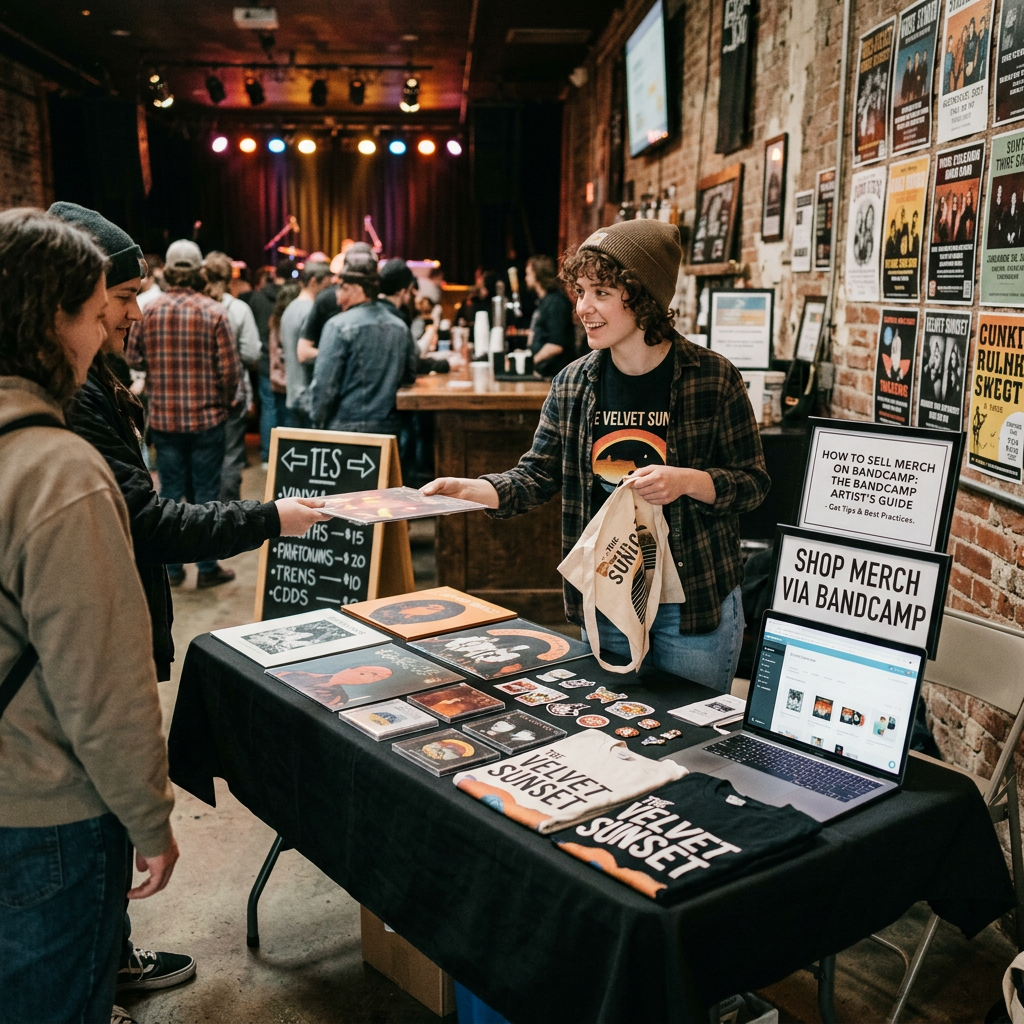
Selling music is only one way to make money from your Bandcamp page. For independent artists with an engaged audience, physical merchandise can give fans another way to support you while potentially increasing how much each customer spends.
Bandcamp lets artists sell physical music such as vinyl, CDs and cassettes alongside other merchandise including clothing and other physical products. You control your prices, stock quantities and shipping rates, while Bandcamp provides the storefront and order-management tools.
But simply uploading a T-shirt and hoping somebody buys it isn’t much of a merch strategy.
In this guide, we’ll look at how to sell merch on Bandcamp, what you can sell, how Bandcamp merch fees work, how to price and ship your products, and some practical ways to make your merchandise more appealing to fans.
If you’re working on your wider Bandcamp sales strategy, start with my complete guide to How to Sell Music on Bandcamp too.
Quick Guide

What Can You Sell on Bandcamp?
Bandcamp isn’t limited to digital downloads.
Artists can sell physical formats such as vinyl, CDs and cassettes, alongside other physical merchandise such as clothing and artist products.
That gives independent artists plenty of room to experiment.
Depending on your audience and budget, you might consider:
- T-shirts or hoodies
- Vinyl
- CDs
- Cassettes
- Posters or prints
- Stickers
- Limited-edition items
- Signed products
- Bundles combining merchandise and music
You don’t necessarily need a huge catalogue.
For a smaller artist, one carefully chosen product that your existing fans genuinely want may make more sense than paying upfront for several different products and hoping they sell.
Merch should be an extension of your music and audience rather than something you feel you need to produce simply because other artists do.
How to Add Merch to Bandcamp
Bandcamp’s current process is relatively straightforward.
From your artist account, select + add and then merch. You’ll choose the type of product, give it a title and description, upload photographs, set the price and shipping options, specify the available quantity and add any relevant options such as clothing sizes.
One particularly useful feature is inventory management.
You can tell Bandcamp how many units you have available, and the quantity automatically decreases as items sell. If you’re also selling stock elsewhere—for example at gigs—you’ll need to update your Bandcamp inventory accordingly. Setting the quantity to zero marks an item as sold out.
Don’t rush the product page itself.
Your photographs and description are part of the sale. Use clear images that show what the fan is actually buying, and include the information someone needs before ordering.
For clothing, that might include sizing and material. For a signed or limited product, explain exactly what makes it different.
How Much Does Bandcamp Charge for Merch?
Bandcamp currently takes a 10% revenue share on physical goods.
Payment processing fees are separate and vary depending on the transaction.
This is important when deciding how much to charge.
A £20 product does not mean £20 profit.
You need to consider:
Product cost + packaging + Bandcamp fees + payment processing + any shipping costs you absorb = your actual cost of making the sale.
So work backwards before setting your price.
For example, if producing an item costs you £8, don’t simply look at another artist selling something similar for £15 and assume £7 is your profit.
Know your numbers first.
That becomes even more important with expensive products or small production runs where your cost per unit can be considerably higher.
How Should You Price Your Bandcamp Merch?
There isn’t one correct Bandcamp merch price.
Instead, think about three things.
Your Costs
Calculate what the product actually costs you to make and sell.
Include the product itself, packaging materials and the platform and payment costs you’ll incur.
Your Margin
Decide how much you actually want to make from each sale.
Selling 20 products while making almost nothing from each one may feel exciting, but it doesn’t necessarily help build a sustainable music business.
What the Product Is Worth to Your Fans
Merch isn’t always comparable with an ordinary high-street product.
A signed CD, limited pressing or T-shirt from an artist someone genuinely supports has an additional connection attached to it.
That doesn’t mean charging an unrealistic amount. It means you don’t necessarily need to compete solely on being cheap.
Your goal should be a price that makes sense to your audience and makes the sale worthwhile for you.

Should You Let Fans Pay More for Merch?
Bandcamp allows artists to enable the option to let fans pay more if they want when setting the price of merchandise.
That gives a fan the opportunity to contribute more than your minimum asking price.
It’s worth distinguishing this from deliberately underpricing your merch. You still need a minimum that covers the economics of selling the physical product.
The additional contribution is simply an opportunity for particularly supportive fans to give you more.
We’ve covered this pricing model in much more detail in Should You Use Pay What You Want on Bandcamp?.
How Does Shipping Work on Bandcamp?
This is one of the most important parts to understand before listing physical merchandise.
Bandcamp does not store or ship your merchandise for you.
Artists and labels are responsible for fulfilment and decide what they charge customers for shipping.
When setting up an item, you can specify shipping rates for different regions. Check the real cost of sending your products—including the weight of the item and packaging—rather than guessing.
You can also set an additional shipping amount when someone buys more than one item. This can make multiple-item orders more attractive without charging the fan the full individual postage cost for every product.
Be Careful With International Shipping
Before opening a product to worldwide orders, find out what it will actually cost to send.
You don’t want to discover after making a sale that the shipping amount you’ve charged doesn’t cover your postage and packaging.
Taxes and customs can also vary depending on where you and your customer are based, so check Bandcamp’s current guidance and the relevant requirements before selling internationally.
How to Make Your Bandcamp Merch More Appealing
Getting the technical setup right is only half the job.
You still have to give someone a reason to buy.
Make It Feel Connected to Your Music
Think beyond putting your artist name on a generic product.
Artwork, lyrics, imagery, an album concept or something recognisable to your existing audience can make the merchandise feel connected to being a fan.
Consider Limited Runs
You don’t necessarily need hundreds of units.
A smaller run can reduce your financial risk and can make sense when you’re still learning what your audience wants.
Just be genuine about scarcity. If you’ve produced 25 signed copies, saying there are 25 is useful information. There’s no need to manufacture fake urgency.
Use Good Photographs
Your product photographs matter.
The first image is particularly important because it represents the product when people are browsing your merchandise.
Use good lighting and show enough detail for someone to understand what they’re buying.
Write a Proper Description
Explain what the product actually is.
Include relevant dimensions, sizes, materials, edition details and what’s included.
If something is signed, numbered, handmade or otherwise unusual, say so.
Don’t make a fan hunt for the information they need before deciding whether to buy.
Should You Bundle Music With Your Merch?
This is one of the more interesting parts of Bandcamp’s own merch guidance.
Bandcamp says its data shows that pairing a track or album download with a merch item increases sales of that item.
That makes the feature worth considering.
For example:
T-shirt + album download
Vinyl + digital album
Signed CD + album download
The exact offer will depend on what you’re selling, but the principle is useful: you’re a musician, so don’t treat the music and merchandise as two completely separate parts of your Bandcamp page.
A fan buying something physical may value having immediate access to the music too.
How to Promote Your Bandcamp Merch
Don’t assume that putting merchandise on Bandcamp means people will automatically discover it.
Tell your existing audience it exists.
That could include your mailing list, social channels, website, gigs and your wider release campaign.
Instead of repeatedly posting “BUY MY MERCH,” give people something interesting to engage with.
Show the product arriving.
Explain why you made it.
Show the artwork.
Share photographs of signed copies.
Tell fans how many you’ve produced.
Include the merch naturally when talking about the release it belongs to.
And make sure your wider Bandcamp presence is working alongside it. If you need help attracting more people to your page, read How to Get More Bandcamp Sales.
How to Fulfil Bandcamp Merch Orders
When somebody buys merchandise, the work isn’t finished.
Bandcamp provides a Merch Orders area where sellers can manage physical orders, access shipping details, mark orders as shipped and provide relevant information to customers.
Keep on top of this.
Retain proof of shipment where appropriate and regularly check the email address you use for fan communication so you can respond to questions about orders.
If there is a delay, communicate.
It’s sensible to wait until you have a realistic production and shipping schedule before putting a product on sale. If something changes after people have ordered, update them rather than leaving them wondering where their purchase is.
A merch buyer isn’t just an order number. They’re someone who has chosen to spend money supporting your music.
Give them an experience that makes them comfortable buying from you again.
Is Selling Merch on Bandcamp Worth It?
It can be.
You don’t need thousands of fans before you’re allowed to think about merchandise.
A relatively small audience containing people who genuinely care about your music can sometimes be more commercially valuable than a much larger passive following.
But merch makes the most sense when the numbers work.
Before ordering stock, ask yourself:
- Do I have evidence that people want this?
- What will each unit cost?
- What will I charge?
- What will I actually make after costs and fees?
- How much stock can I realistically sell?
- Can I fulfil the orders reliably?
Start at a level appropriate to your audience.
If the first product sells, you’ve learned something useful. You can reorder, expand the range or test another idea.
If it doesn’t, you haven’t filled a spare room with 200 T-shirts.
Want to Make More Money From Bandcamp?
Merchandise can increase what a fan is worth to you, but it’s only one part of building a Bandcamp strategy that generates consistent sales.
Bandcamp Mastery walks you through how to improve your Bandcamp presence, attract more fans and turn more of that attention into sales.
If you’re already using Bandcamp but want to move beyond waiting and hoping someone discovers your music, this is the next step.


Leave a Reply